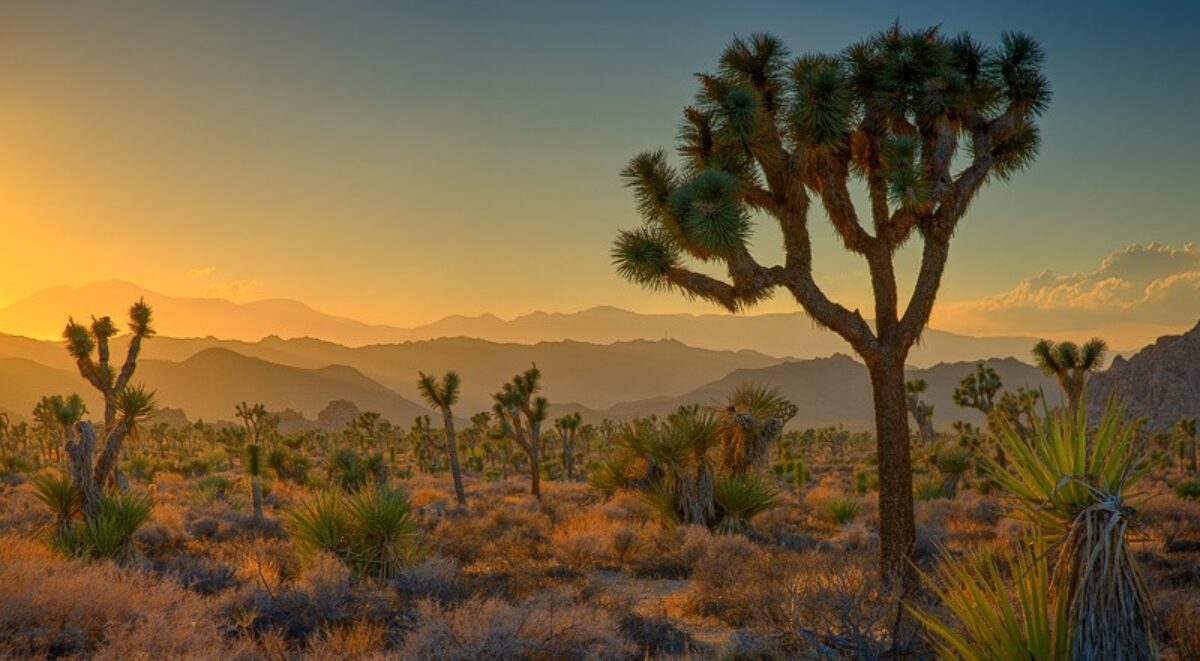
A Ten-Step Program for Grad ND Filters

I have a couple of Lee graduated neutral density filters in my camera bag.  I don’t use them very much because I’m kind of an HDR guy.  But the past couple of mornings we’ve had some very clear sunrises and given the location of our home in the Southern California foothills this turned out to be a good opportunity to play around with my grad ND filters.

I discovered a few very interesting things.  I’m just going to provide a checklist here without any illustrations.  Hopefully it will make sense.

Continue reading “A Ten-Step Program for Grad ND Filters”

(2330)

Sharpening

Happy New Year!  This is the first post for 2009.

I get a lot of questions about sharpening so I thought I’d share with you the way I do it.  Let’s begin with the question…,

Continue reading “Sharpening”

(853)

The Photoshop Two-Step

I have a good friend who is a very fine photographer who hates Photoshop.  Not me.  I love it and will spend days and weeks on a single image.  But my friend hates Photoshop and wants to get done with it as quickly as possible.

So I showed him a simple two-step approach to Photoshop that gets you a long ways toward a great looking photograph.  And I’d like to share it with you now.

Continue reading “The Photoshop Two-Step”

(1073)

The Photographer as Artist – Creative Vocabulary

The Photographer as Artist – Creative Vocabulary

In this third article we continue our exploration of photography from the perspective of other artistic disciplines.  The first article was The Photographer as Artist – Introduction.  We introduced the idea that art stands on the Tripod of Artistry, three principles that are common to all arts.  The first leg of the tripod, the expressive capabilities of the medium, were explored in The Photographer as Artist – Expressive Spectrum.  In this article we will look at the second leg – the Creative Vocabulary.

Creative Vocabulary

We all know that to be an effective writer it helps to have a large vocabulary.  It just stands to reason that the larger the writer’s vocabulary, the more effectively he or she can communicate.  Poets probably have the greatest mastery of the language as that is the most condensed form of communication.  This reaches its absolute zenith in haiku, that wonderful form of Japanese poetry that paints the most beautiful images in three lines of 5-7-5 syllables.  Probably the most famous is this exquisite poem from the haiku master, Basho (1644 – 1694).

Continue reading “The Photographer as Artist – Creative Vocabulary”

(1547)

The Photographer as Artist – Expressive Spectrum

We’re exploring art from the perspective of other artistic disciplines to shed light on what it means to be a photographer and an artist.  (You can read The Photographer as Artist – Introduction.)  We’re doing this because photographers often seem to be expected to meet a “reality standard” that has not been imposed on other artists since the classic period of Greece two thousand years ago – “Did you use a filter?” “Are these colors real?” “Did you manipulate this photograph?”

There are three areas to explore – what I call the Tripod of Artistry – the three legs upon which all arts and artists stand.  This article looks at the first of the three – Expressive Spectrum.

Continue reading “The Photographer as Artist – Expressive Spectrum”

(1067)

The Photographer as Artist – Introduction

I’ve been thinking a lot lately about the role of the photographer as artist.  I don’t think there’s doubt in anyone’s mind that photography can be a sublime art form. 

But not all photography is art and not all photographers are artists.  Just about everyone has a camera these days.  In fact it seems you can’t buy a cell phone without one.  Virtually everyone is taking pictures but not very many photographers are trying to produce art.

Continue reading “The Photographer as Artist – Introduction”

(1341)