Honesty in Photography

I just read a great email from Brian Peterson, founder of The Perfect Picture School of Photography.  He ran an unscientific opinion pole on whether photographers felt it was OK to dramatically alter photographs in Photoshop.  Now, by ‘dramatically alter,’ Brian means to add major elements to an image that were not present in the original scene or make other major changes that alter the content of the image.

He has a provocative blog post with the title that starts, “Every photograph is a ‘lie,…’,  In it he raises the excellent point that even those photographs that aren’t altered in Photoshop are still an abstraction of reality and thus a ‘lie.’  I recommend you read it.

What were the results of his opinion pole?  Brian reports that 41% of photographers felt that it is OK to dramatically alter images in Photoshop and NOT tell anyone unless asked.  And if asked, some would say, “It’s none of your business.”  The reason photographers felt this way boiled down to two words – Artistic License.

I have my own thoughts on “artistic license” and would like to share them with you.

Continue reading “Honesty in Photography”

(1497)
Lightroom Tutorial – LR 3

Lightroom 3 came in the mail yesterday (along with CS5) so today I’m trying it out.  There’s not a lot of new functionality like there was when LR2 introduced local adjustments.  But there are some new things I’m really excited about.

Continue reading “Lightroom Tutorial – LR 3”

(1587)

Photography Tutorial – Moving Water

Landscape photographers love to photograph moving water – waterfalls, rapids, even water quietly slipping over a rock.

When photographing moving water the primary exposure consideration is shutter speed.  A very short shutter speed, say 1/500 sec, can produce the ‘ice sculpture’ look’ in which the water is suspended in shiny, crystal clear forms.  This can be very effective and exciting.  As the shutter speed is lengthened, say to 1/15 sec,  the water begins to blur.  First you see little short traces of each of the drops.  Then as the exposure lengthens to a half second or more the traces merge together into the beautiful effects we love.  Really long exposure of 2 or more seconds produce a misty effect in which nearly all texture in the water is replaced with soft clouds of light.

But how do you get the long exposures you need, especially on a bright sunny day.

Continue reading “Photography Tutorial – Moving Water”

(3043)

Mastering Exposure

This article pulls together several articles on exposure and makes them available in one place.

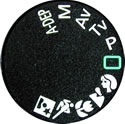
In my photography workshops and one-on-one training I frequently have people ask me if the workshops are suitable for novices.  They go on to explain that they think they have a good eye but are a bit baffled by their camera, especially when it comes modesto exposure.  They just put their camera’s exposure mode dial on the little green rectangle (the fully automated mode) and shoot away. In other words, the camera makes all the decisions regarding exposure – ISO, f/stop and shutter speed.  But the camera’s built in light meter is often fooled and the exposure is off.

Getting the correct exposure is one of the most essential first steps in getting a great photograph.  I see a lot of photographs that have compelling compositions but are poorly exposed and the potential impact is lost.  So for those individuals who are interested in taking a photography workshop but aren’t at least passingly familiar with the operation of their camera with regards to exposure, I have a number of posts dealing with the topic that I refer them to.  I thought I’d pull them all together in a single post to make them easier to find.


Continue reading “Mastering Exposure”

(831)

Bishop Creek Spring


_A1P5434

Originally uploaded by Ralph Nordstrom

Here is one of the photos I took today along the South Fork of Bishop Creek. South Lake was still snowed in but down the canyon spring was marching up. You can view the rest of the photos I took today on Flickr.

(280)

Photography Tutorial – Light Meter

There’s something I’ve been puzzling about for a long time.  So I finally decided to check it out and share the results with you.  I wanted to know the relationship between the camera’s built-in light meter and the histogram.  OK, sounds geeky so what exactly am I talking about and why do I care?

Continue reading “Photography Tutorial – Light Meter”

(1469)

zabriskie_point_7_2009_600

I thought I knew where I wanted this image to go but it had a mind of its own – beyond realism, beyond believability even, into pure emotion.

(416)

Photoshop Tutorial – Atmospheric Haze

Haze is an integral part of landscape photography.  Distant mountains are not as clear as close up objects.  They lack contrast, are often lighter and may even appear blue or even purple (purple mountain majesty).  It’s interesting that in the history of Western art, painters didn’t incorporate atmosphere into their paintings with landscapes until the Renaissance.

Continue reading “Photoshop Tutorial – Atmospheric Haze”

(6202)

On Purchasing a Fine Art Photograph

Most of us aren’t in the habit of purchasing art.  And for some of us the thought may be just a bit intimidating, especially when the work of art is, oh, shall we say “expensive.”  How do you now you’re investing your money wisely?

I can’t speak for other art media such as paintings, sculpture, etc.  But I can offer three suggestions when purchasing fine art photography.  Here are some things you should expect from a fine art photograph.

Continue reading “On Purchasing a Fine Art Photograph”

(977)

Photoshop Tutorial – Black Point

What makes a compelling photograph?  Well, there are quite a number of things and one of them is “Black point”.  But before proceeding, let’s take a quick step backwards.

Photographs look better if they utilize most of not all of the inherent dynamic range of the medium, be that paper, a computer monitor or some other electronic medium.  This is to say that the image has deep shadows, brilliant highlights and the full range of tonalities in between.   It’s the difference between a flat image and an exciting one.  Here’s a nice flat image.

kolob_canyon_flat Kolob Canyon Flat Image

Continue reading “Photoshop Tutorial – Black Point”

(17224)