Mastering Exposure

With the advent of digital cameras people don’t understand exposure so well any more.  It’s not like in the early SLR days where the cameras didn’t have built in light meters.  You had to use a hand held light meter or, lacking that, just guess.  There was no way you could get along without knowing ISO (ASA at the time), shutter speeds and f/stops.  But that’s all changed now and probably not for the better, at least if you want to take photographs that make an impact.

Continue reading “Mastering Exposure”

(936)

Getting the Most out of a Photography Workshop

Get the most out of your upcoming photography workshop.

You’ve spent a lot of money and are about to invest a lot of time in an upcoming photography workshop. It’s natural you’ll want to make the most of it. And there are several things you can do before hand and during the workshop to maximize your experience.

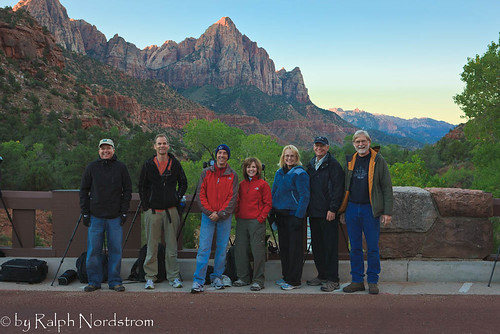
The Gang
Continue reading “Getting the Most out of a Photography Workshop”

(1343)

Creative Vocabulary

Art is communication and each art form has a vocabulary, the creative vocabulary. Explore the creative vocabulary of photography and discover how being aware of it can help you grow and develop as an artist.

We all communicate with each other.  In our every day dealings we use our verbal vocabulary.  But as artists we also communicate, this time through our medium.  And for this we have another vocabulary, our Creative Vocabulary.

Let’s take a closer look.

Continue reading “Creative Vocabulary”

(1320)

Lightroom Tutorial – Camera Specific Presets

I’m a landscape photographer who likes to do it all himself.  I don’t want my camera making decisions for me.  That’s one reason why I shoot RAW.   And I don’t want Lightroom doing it either.  Lightroom has default presets that it applies to your photographs when you import them.

To make things interesting, I shoot with two cameras (three if you count my iPhone).  My main camera is a Canon 1Ds Mark III and my don’t-leave-home-without-it camera is a Canon G11.  These cameras have widely different characteristics to say the least.  Lightroom applies the same default preset to files from both cameras when they are imported.

Wouldn’t it be nice if you could set up separate presets for each camera and set them up the way you like them.  Well, that’s exactly what you can do.  In fact, you can go a step farther than just undoing the Lightroom defaults.  If there’s something you always do to every file you can create presets specific to each of your cameras and apply all the adjustments you want.

Continue reading “Lightroom Tutorial – Camera Specific Presets”

(4244)

Photographic Challenges – A Solution

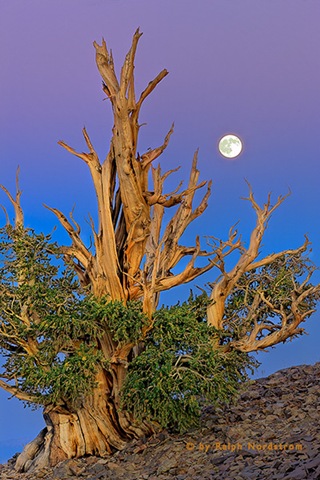
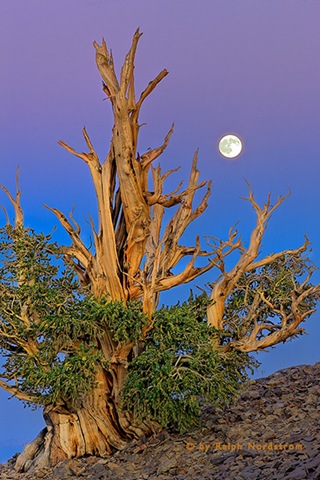
A few weeks ago I posed a photographic challenge.  What decisions would you make to capture the Bristlecone Moon image?  Here’s the photograph again.
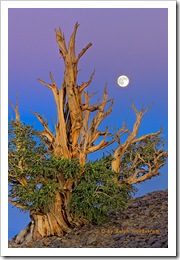
bristlecone_moon_2008Bristlecone Moon (2008)

This shot poses some interesting challenges and here’s a link to the first post that spells out the situation in case you missed it.

Photographic Challenge – the Situation

The planning for this photograph actually began several months before. I had the idea of photographing a bristlecone pine with the full moon as it rose behind it through the earth shadow.  The earth shadow is that ribbon of color that is projected in the sky above the horizon directly opposite the rising or, in this case, setting sun.  So the first step was to select a full moon weekend, contact my buddy, Eric Winter and head up to Grand View campground in the White Mountains.  We arrived three days before the full moon to scout the area and find a tree that had everything I was looking for – an open view to the east that looked down on the Great Basin below.  I also new I needed to have enough room to back away from the tree so I could use a telephoto and thus increase the relative size of the moon.

There are only two named bristlecone groves in the Whites – Schulman Grove where the oldest tree is found (4,700 years old) and the remote Patriarch Grove.  The Schulman Grove is at the end of the paved road and just a few miles from Grand View campground.  The Patriarch Grove is another 8 miles down a dirt road and when the rangers say it’s a 45 minute drive you’d better believe them cause it is.

The first day we scouted the Patriarch Grove but unfortunately, it is in a broad   depression that has a large hill to the east.  There weren’t any trees that had what I was looking for.  The next day we killed some time in Bishop and dropped into Vern Clevenger’s gallery.  Vern and I chatted and I told him what I  had in mind.  He advised me to get the shot one or two nights before the full moon, not the night of the full moon.  It turned out to be a critical piece of advice that I needed.

So back up to the Whites and back out the dirt road in a search for THE tree.  We scouted a couple of places but none worked out.  We climbed back into the truck and continued down the road.  “What about that tree?” Eric asked as we drove by.  It was perfect.  Throwing the truck into reverse, we backed up and parked off to the side of the road.

The tree had a clear view of the eastern horizon.  There was a large hill to the west but all that meant was that the tree would be dropping into a shadow long before the sun dipped  below the horizon.  There was enough space to use my 70-200 lens and back up far enough to fill the frame with the tree.

I had printed the moon charts from the internet so I new the precise time and azimuth of the moonrise and was able to figure out where I wanted to position myself.

I started working with compositions well before the moon was due and decided to crop off the ends of the branches because I liked the proportion better.  Then I sat on Mother Earth and quietly waited.  The shadow from the hill to the west crept across the road toward the tree and finally swallowed it.  I sat, looking to the east, waiting for the moon to rotate into view.  Sitting up high on the side of the White Mountains I got a strong sense of the earth turning on its axis, rotating until the moon appeared above the horizon.  One moment it wasn’t there and the next it was.  It was time to go to work.

The moonrise was playing out just like I had hoped.  This is when I get nervous.  “Slow down, don’t make a mistake,” I kept telling myself.  Depth of field: f/16.  Shutter speed: 1.2 sec at ISO 100.  Too slow.  Bump the ISO to 200.  I heard Ansel Adams speak years ago at Pasadena City College.  He told the story of taking “Moonrise over Hernandez.”  He didn’t have time to take out his spot meter and do his usual zone thing.  So he exposed for the moon.  He knew it was in full sunlight and he knew what its luminance was without having to measure it.  So he put the moon in Zone VII and fired away.  I was thinking of him when I realized that I needed to shoot HDR if I wanted the moon to be more than a blank white disk, if I wanted to catch the man in the moon.

So I turned on the camera’s Highlight Tone Priority function to gain a little extra dynamic range, kept the ISO at 200 and bracketed the exposure by one stop.    The focal length was 185 mm and the total elapsed time for the three exposures was about 2 1/2 seconds.  At 185 mm you have 3.2 seconds to get your shot off without the moon (or stars) moving perceptibly.  (There’s a formula for calculating that.  It’s 600/focal length in mm.  It’s a handy formula to know.  See Ten Tips for Exciting Nighttime Photography.)

So that’s pretty much the whole story.  There are other ways go solve this challenge.  Carefully exposing the moon to fall at the right end of the histogram without highlight clipping would result in a capture in which both shadows and highlights could be recovered in Lightroom or Photoshop.  A graduated neutral density filter is problematic because it would cover part of the tree.  So HDR works well in this situation because you get a good exposure on both the moon and the tree.

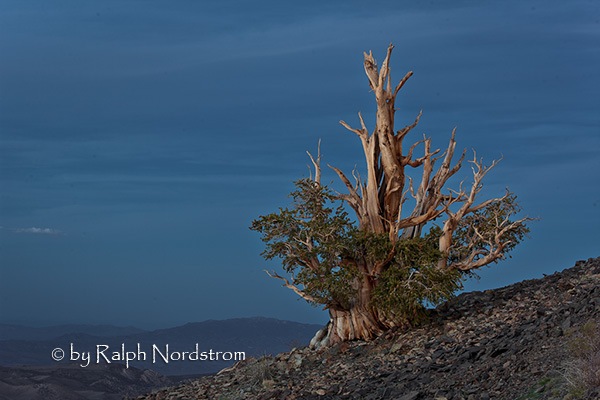
I’ve returned to this tree several times since September of 2008 when this photograph was taken.  It’s one of the stops on our Eastern Sierra workshop.  Each time I return it has a different feel to it, a different mood.  Here’s what it said to me this year.
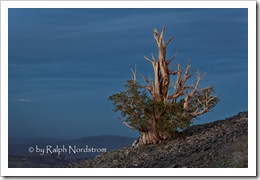
bristlecone_dusk_2010 Bristlecone Dusk (2010)

It’s a remarkable tree and I plan to keep on coming back.

Join me on an upcoming workshop.

To see more of my photographs click here.

(907)

Photographic Challenges – the Situation

It was about two years ago that I was making plans for a very special photograph.  The concept was to photograph a bristlecone pine with the full moon rising behind it.  I also wanted the full moon in the earth shadow.  That’s the band of pink that rises in the east as the sun sets in the west.  Above the earth shadow the sky is a light blue.  In the shadow it’s a much darker blue.  And in the band between light and dark is a spectrum of colors, much like what happens in the west but more subtle.

Photographic Situation

Timing was going to be critical.  I needed to pick the right day of the month so that the moon would be in the earth shadow.  Too early and the moon would be too high when the shadow appeared.  Too late and the moon would rise well after the shadow was gone.

bristlecone_moon_2008 Bristlecone Moon (2008)

Continue reading “Photographic Challenges – the Situation”

(1092)

Cliché

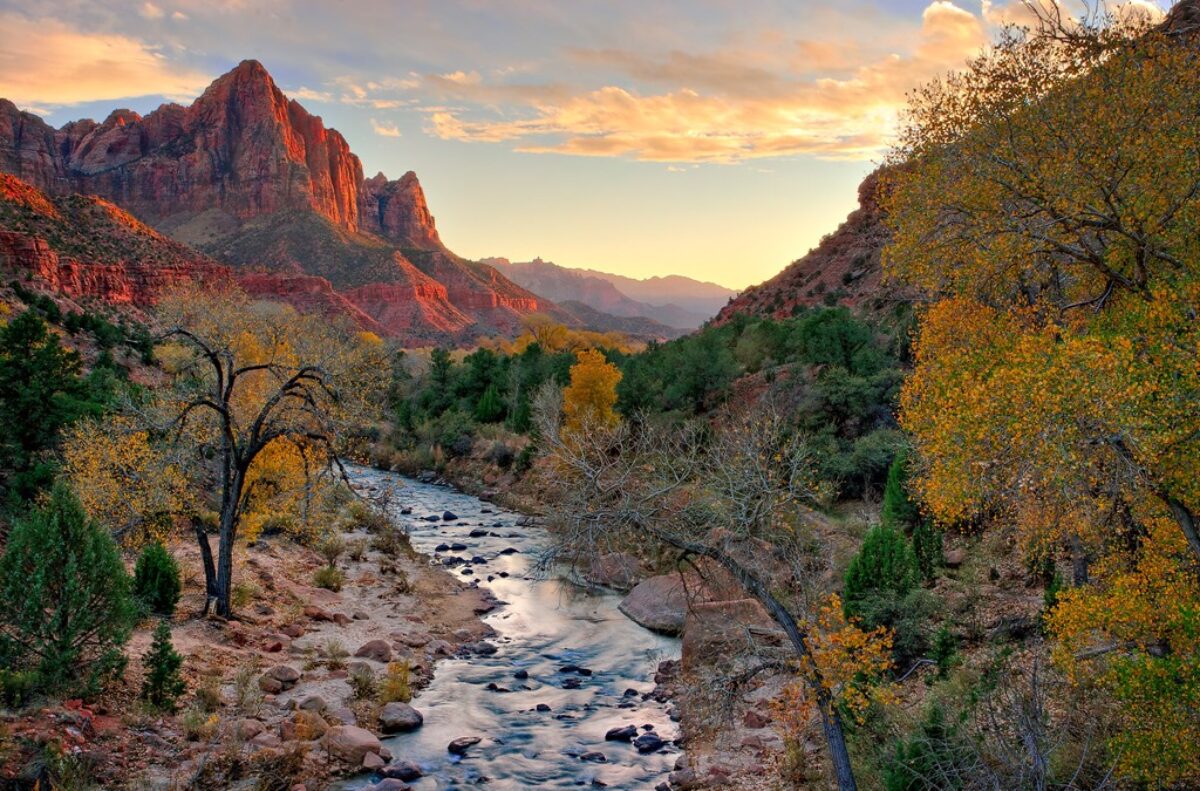
Cliché, to many photographers this is a dirty word.  Photographs of Yosemite Valley from Tunnel View, the Tetons from Ox Bow Bend, the Watchman in Zion from the bridge, Delicate Arch – all are considered by many to be clichés.

What exactly is a cliché?  Something that has lost its originality, ingenuity, impact from long overuse.  In other words, it’s been done before – and many times.  Some have gone so far as to suggest that there are no photographs left in Yosemite Valley that are not clichés.

Not all of us agree.

Continue reading “Cliché”

(733)

Photography Tutorial – Getting the Shot

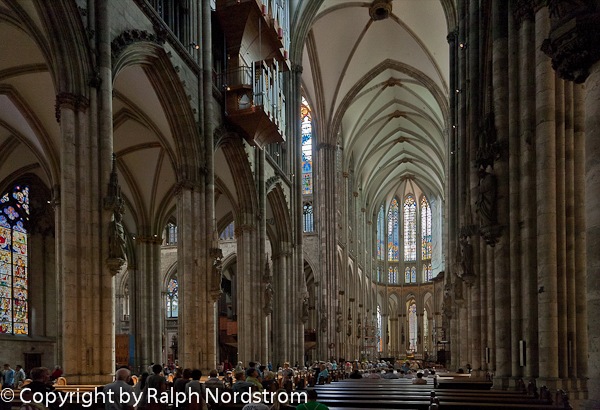
Last week I published a post in which I presented a photographic situation and solicited input on what decisions might go into getting the shot.  The situation was to photograph the interior of the beautiful Cologne Cathedral in Germany.  Here’s a link to the post.

Getting the Shot – Cologne Cathedral

In this post I’d like to share what was going through my mind as I prepared to push the shutter.  For starters, here’s the final photograph (click the photograph to enlarge it).

_A1P6721-Edit Cologne Cathedral

You may recall from the original post that I spoke of two things that go into every work of art – the artists Creative Vocabulary and the Interpretive Decisions he or she makes.

In this instance, which focused on the technical aspects of getting the shot, the Creative Vocabulary consists of the capabilities of the camera and the knowledge to use them.  The Interpretive Decisions are those decisions made in the moments that lead up to the instant the shutter is pressed.  So let’s step through what was going through my mind as I prepared to capture this image.

Continue reading “Photography Tutorial – Getting the Shot”

(1147)

Eastern Sierra Photographs

I finally got a chance to work on a few more Eastern Sierra workshop photographs from June.  It’s amazing how many things barge to the front of the line.  But I finally got to these.  I hope you enjoy them.

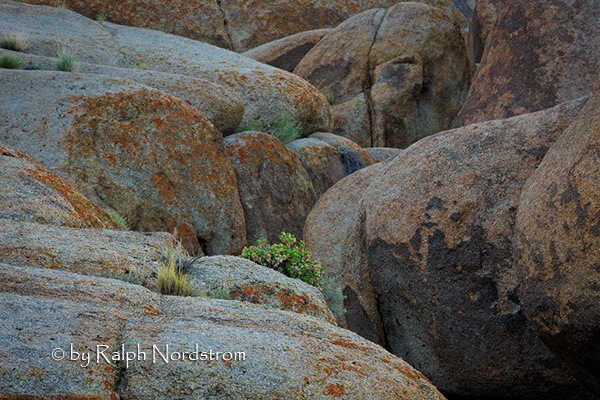
alabama_hills_vignette_2010Alabama Hills Vignette

This one was taken before the workshop started.  It’s just one more wonder to be found in the Alabama Hills.  I get a very quite feeling from this one.

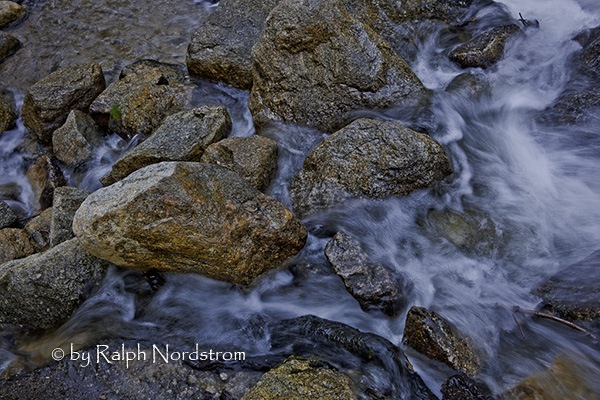
lone_pine_creek_2_2010 Lone Pine Creek 2

One of the exercises we did during the workshop was to photograph the chapter, paragraph and sentence on Lone Pine Creek at Whitney Portal.  This was my sentence photograph.  The water is swirling around the rocks going every which way.  This image captures the whole turbulence of the cascade in this little microcosm.

bristlecone_dusk_2010 Bristlecone Dusk

I keep coming back to this bristlecone pine in the White Mountains.  And each year the interpretation is different.  It was somewhat overcast this year and as night was coming on the clouds created subtle patterns in the sky.  One of the things I like about this tree is how it grows high above Great Basin.  It’s been here for thousands of years.  On this evening it softly glows as the day turns to night – one more time.

half_dome_storm_2010 Half Dome Storm

The Tioga Pass road opened just a few days before we arrived in Lee Vining.  So there was no doubt that we would photograph sunset in Yosemite.  Olmsted Point provides a unique view of Half Dome from the back side.  As luck would have it a storm was rolling across the Sierra and we were there.  I love the power in this photograph.  When I look at the image I can’t help thinking how good it would look in a Southern California arts and crafts style house.

These will be up on my website soon but I wanted to give you a preview.

Join me on an upcoming workshop.

To see more of my photographs click here.

(690)

Photography Tutorial – Getting the Shot

I have what I think is a fun idea that can lead to an interesting discussion.  Let me explain.

I often think of art in general and photography in particular as involving two very important elements – creative vocabulary and interpretive decisions.  Creative vocabulary is the knowledge, skills and techniques we use as artists and just like our verbal vocabulary, we use the ‘words’ in our creative vocabulary to express ourselves.  As we grow as artists our creative vocabulary grows and we are able to more fully and richly communicate our thoughts and feelings.

Interpretive decisions recognizes the fact that each of us has a unique world view and a unique thing to say.  When creating a work of art we make numerous decisions, decisions that shape the way we interpret our subject and thereby communicate what it is we have to say about it.

So, this leads to my fun idea.

Continue reading “Photography Tutorial – Getting the Shot”

(1315)