Size Matters

I spent the past couple of weeks making almost fifteen large prints for a client.  Image sizes were 13X20 and 16X24.  Boy, it was fun.  I’ve worked with these images over the years.  They were all 10X15.  But kicking them up even just one notch takes them into an entirely different realm.

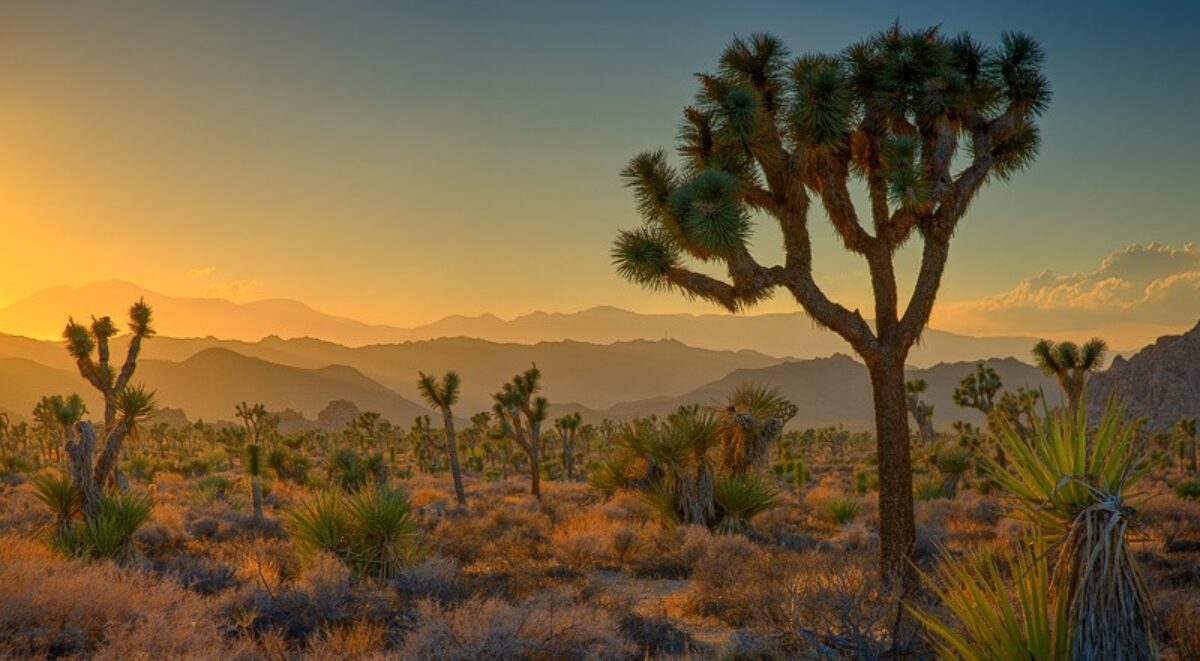
Royal Succession Royal Succession (2005)

Even what seems like a modest step from 10X15 to 13X20 makes a huge difference.  There’s more to it than just the impact of a larger image.  Subtle details emerge that are are not readily apparent at the smaller size.  Colors seem a little more vibrant. The image feels more spacious.  And there are a lot more impressions that are difficult to put in words.

It’s difficult to really get the true impact of some images when they are small.  Granted, some images work best when they’re small.  But others beg to be large.

So if you haven’t done so yet, take a couple of your images and blow them up.  If you have a printer that can print  larger sizes, do so.  If you don’t have a large enough printer or use a lab, go ahead and get a 16X20 if you have done this before.  You’ll be really glad you did.

We lead photography workshops.  Click here to check them out.

To see more of my works click here.

To join us on Facebook and become a fan, click here.

(392)

Default Camera Configuration

When I’m out shooting I often make adjustments to my camera settings to get the right shot.  The problem is it’s easy to forget what you’ve done.  Then the next time you grab your camera and start shooing you might miss the shot because something is configured wrong.  So I have this routine I go through in the hotel room every night.
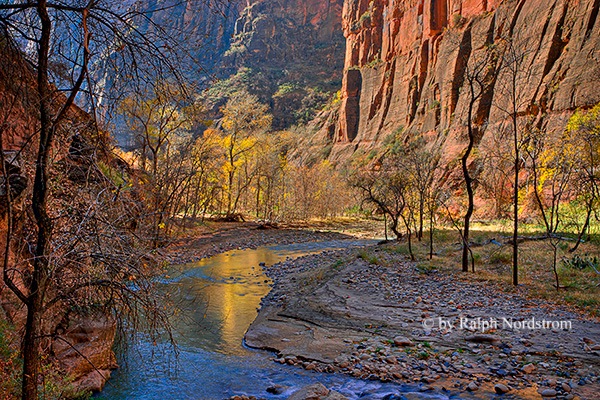
Riverside_Walk_2008

First, I clean everything.  I carry a soft cotton dish towel in my camera bag.  First I wipe down the camera body and all the lenses.  I try to not only wipe off the surfaces but all the nooks and crannies.  I’m very careful not to damage anything.

Next I check the front and back elements of each of the lenses to make sure they are spotless and dust free.  The front element will get blown off first.  I prefer the Giotto Tornado as it’s designed specifically for cameras.  If that doesn’t get everything I’ll use a microfiber lens cleaning cloth.  As a last resort I’ll use a lens cleaning solution.  The best way to do wet cleaning is to put a drop or two on the microfiber cloth, not on the lens element.  The back element gets blown off.  It usually doesn’t need any more than that because it isn’t exposed to the elements near as much as the front element.

I also check my filters, making sure they too are spotless.  I use the same procedure that I use for cleaning the lens elements.

Next I clean the camera sensor.  Again, I blow it off first using the Giotto Tornado.  I remove the lens, pop the mirror out of the way using the camera’s manual clean function and hold the body with the opening pointing down.  I’m really careful how hard I blow on the sensor.  I prefer to use puffs of air, not a tornado blast like the name suggests.  The last thing I want is some microscopic particle of sand to get embedded in the sensor’s filter.

I have a loupe from the Visible Dust people that lets me look at the sensor under magnification.  Its six LCD lights really light it up and if you  look carefully you can see dust and stains.

If there’s still dust that the Giotto didn’t get rid of the next step is to use Visible Dust’s Arctic Butterfly.  You charge the bristles with static electricity by spinning the brush with the built-in motor in the handle.  The static charge is usually enough to remove any clinging  bits of dust.  If that doesn’t work then wet cleaning is necessary.  I’d rather not get into that here.

Once the camera body, sensor and lenses are all cleaned there’s one last step.  I set the configuration of all my camera controls to their default settings.  These are the setting I shoot with most often.  We probably all configure our cameras somewhat differently but  here are my default settings (I have a Canon 1Ds Mark III so some of these settings may be specific to Canon).

  • Lenses – set to auto exposure.  Turn image stabilization (vibration reduction for Nikons) on of the lens has it.
  • Exposure – Aperture priority
  • Exposure compensation – 0 stops
  • ISO – 100
  • Metering – Evaluative
  • Drive – Single shot
  • Auto-focus – One shot
  • Exposure bracketing – 0 stops (off)
  • Highlight tone priority – off
  • Number of bracketed shots – 3
  • High ISO speed noise reduction – off
  • Mirror lockup – off
  • White balance – Automatic
  • File format – RAW

One of the nice features my camera has is a ‘My Menu’ in which I have put the menu options I use most frequently.  This makes resetting the camera to its default configuration much simpler as there’s just one place to go in the labyrinth of menu options.  (It also makes it a lot easier to change options in the field.)

The other part of the nightly ritual is to backup memory cards, preferably in two places.  If I only have one backup I’ll refrain from reformatting the card until I get home.  But if I can make two copies I’ll reformat the card.

Oh yes, there are always a lot of batteries to recharge – camera, laptop, external drive, cell phone, GPS,….  (Hint: I carry a power strip with me because there are never enough available sockets in a hotel room.)  After all that, it’s time to get some sleep because sunrise is coming quickly.

To check out our workshops click here.

To check out our photographs click here.

To join us on Facebook click here.

(784)

Learning to Use Your Camera

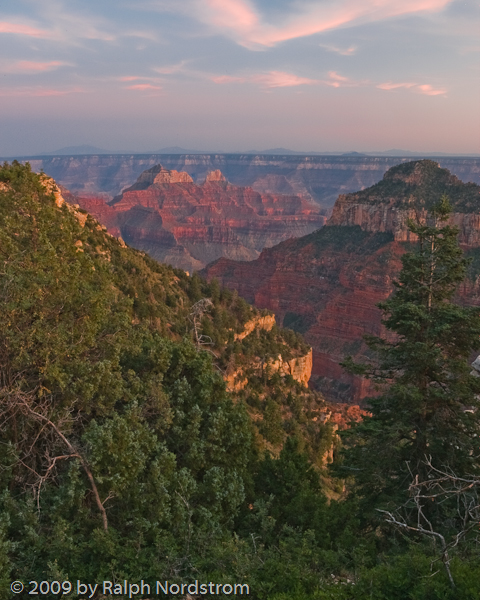
Grand Canyon North Rim

A good friend of mine who conducts workshops tells the story of one of his attendees who showed up with a top-of-the-line camera.  He proceeded to set everything on automatic – exposure, focus, white balance, everything.  When my friend questioned this, suggesting he at least use aperture priority, the person said that he bought the best camera so that the camera could make all the decisions.  He was under the false impression that a great camera would automatically take great pictures.  And, apparently he didn’t want  to have to think about all that stuff that we think about when we’re out shooting.

In my own workshops I notice that some attendees often lack the basic knowledge of the workings of their cameras.  I recall a photographer in the dark passages of Antelope Canyon asking anyone if they knew how to get the camera to take exposures longer than 30 seconds.  It’s a little late to be trying to figure that out when it’s so dark you can barely see your camera.  Or when I talk to people about exposure compensation or bracketing it’s a bit surprising how often they don’t know how to do that.

A great camera is like a great musical instrument or a great golf club.  Having one doesn’t make you a great photographer no more than a great golf club makes you a great golfer.  But, just like the right golf club can imporive the game of a competent golfer,  a great camera in the hands of an accomplished photographer extends the photographer’s range of expression.

A lot of photographers get carried away with their equipment.  They buy the best of this and the best of that.  But not always to they get their money’s worth; that is, they don’t use their equipment to the fullest.

That’s why it’s a good idea to include workshops and other training opportunities in your photography budget.  A quality camera without the knowledge to use it will not produce the images it is capable of creating.  And a workshop is more than being taken to beautiful places.  It is an excellent opportunity to learn to exploit the great features built into your camera.

Workshops are also an excellent opportunity to expand and stretch your creativity.  With an emphasis on composition, light, personal expression and more,  workshops can challenge you to focus on the way you see the world and communicate it to others.

Click here for some workshops to consider.

Click here to see more of my work.

Click here to join me on Facebook.

(736)

Brainstorming in Photography

Have you ever done a brainstorming session?  It’s great for generating fresh, out-of-the-box ideas.  It’s used when you want to find a solution.  You can do it by yourself or with a group but the basic rule is you write down everything that comes into your mind.  Nothing gets discussed or edited or rejected.  No  matter how outrageous the thought, it gets recorded.  It’s only when you run out of ideas that you go back over the  list and discuss the various ideas, eventually zeroing in on the one or ones you want to pursue.

Well, I’ve recently started using a brainstorming technique in Lightroom.  It’s the same concept – develop as many versions of the photograph with no evaluation, no criticism, no limits.  Just try as many things as you can think of.  Here’s how it works.

Continue reading “Brainstorming in Photography”

(1447)

Grand Canyon Dawn

When we got to our campsite in Grand Canyon North Rim I was a bit confused about the time zone.  We came from Southern California (Pacific Time) and Arizona is in Mountain Time.  The thing is California is in Pacific Daylight Time and Arizona doesn’t mess with that daylight stuff – it was in Mountain Standard Time.  So the times are the same.  But I set my cell phone clock ahead one hour anyway.  Oops.  Then I set the alarm for 04:30 to make a 05:00 appearance at Bright Angel Point exactly 45 minutes before sunrise.

Continue reading “Grand Canyon Dawn”

(523)

Wild Fire on the North Rim

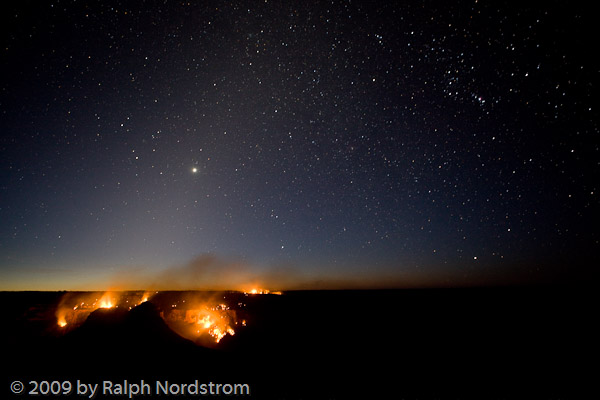
A wild fire was burning on the North Rim along the road to Cape Royal.  It started from a lightning strike.  The forest service fire crews were keeping an eye on it but letting it burn.  They figured it would continue to burn until the first rains or snows put it out.

This made for some fantastic early morning photography from Bright Angel Point – the fire with the Venus and Orion looking down.

(547)

Digital Camera Program Modes

Photography Tips – Your Digital Camera’s Program Modes


Modern digital cameras are in reality complex computers.  They have memories, processors, input and output devices.  And, like computers, their capabilities (read ‘processing power’) doubles every 18 months to 2 years. 

One of the advantages of all this progress is the program modes that are available.  In this photography tips article we’re going to take a look at some of these modes and get an idea of what they can do for us.

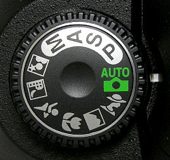
Often the program functions are accessed via a dial on the computer.  In other cameras they are accessed from the menu.  Or, some cameras use a combination of both.  Your camera manual will spell this out for you.

The modes are divided into three broad categories – automatic, semi-automatic and manual.  Let’s look at each beginning with Automatic. 

Continue reading “Digital Camera Program Modes”

(1271)

Reflections on Cliche Photographs

I was surprised again last week to learn that one of my photographs received another award at the Orange County FairVirgin River and the Watchman received a Purchase Award; that is, the fair purchased the photograph for its permanent collection.  Actually, I was more than surprised.

This is a shot that literally thousands and possibly tens of thousands of people take every year.  If you’ve been to Zion you are probably aware that photographers line up on the bridge over the Virgin River nearly every day at sunset to photograph the setting sun on the Watchman, the magnificent face that towers over the south entrance to the park.  It’s one of those places that has become an “Excuse me, may  I squeeze in here?” photography site.  From one end of the bridge to the other, photographers are set up with their tripods legs almost overlapping.

Continue reading “Reflections on Cliche Photographs”

(619)

Eastern Sierra Workshop – Mono Lake Morning Song


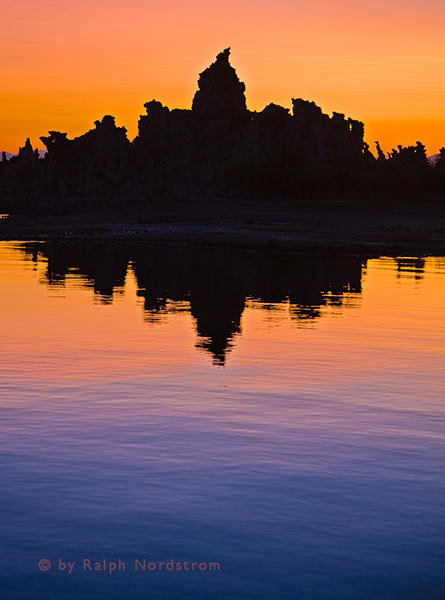
The sunrise was about the orange sky and the blue water.  There were only about 20 or so of us on the lake shore that morning.  The water continues to recede.  There wasn’t a cloud in the sky but it didn’t matter.  It was an intense orange.  And the water was an equally intense blue.  Some mornings on Mono Lake are violent, wind-tossed affairs.  But this morning was tranquil and energetic, both at the same time, a peaceful glory, a song that touches the soul.

 
Mono Lake Morning Song

(637)

2009 Orange County Fair Awards

I was fortunate enough to have all three photographs accepted for the Orange County Fair this year.  And I was very surprised to learn that all three had won awards.  To today I finally made it out to the fair and sure enough they all had ribbons.

Death Valley Reflections had an Honorable Mention ribbon.

Bristlecone Moon also had an Honorable Mention ribbon.

And Virgin River and the Watchman had a 2nd Place ribbon.

You can see more of my work at http://RalphNordstromPhotography.com

(674)