Making a Photograph – Vision

Develop your vision and express yourself through your photographs.

“This photograph speaks to me.”

The photographs that have a strong impact on us speak to us.  The photographer has created an image that moves us.  Did he or she have something in mind when making the photograph?  Probably so.  Strong images just don’t happen by accident.

As one grows as a photographer one’s vision becomes clearer.  One begins to discover who they are and what they have to say.  And as one’s technical and aesthetic skills develop, skills used in both the field and the darkroom, one’s ability to express their vision becomes stronger.

The artist’s vision is an important element of their art.  The clearer an artist is on what his or her vision is the more expressive their art becomes.

If you’re not clear on what your vision is, live with your photographs.  Become aware of what you associate with them, what stories they are telling you, how they make you feel.  And as your vision emerges nurture it, strengthen it, let it speak through you and your art.  And then your photographs will also speak to others.
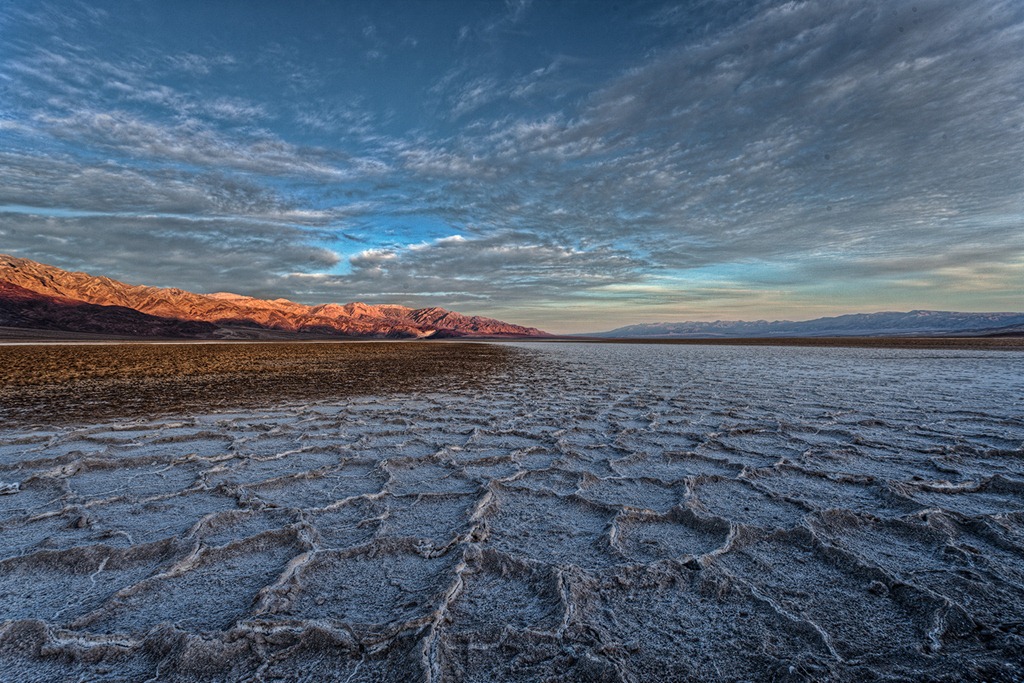
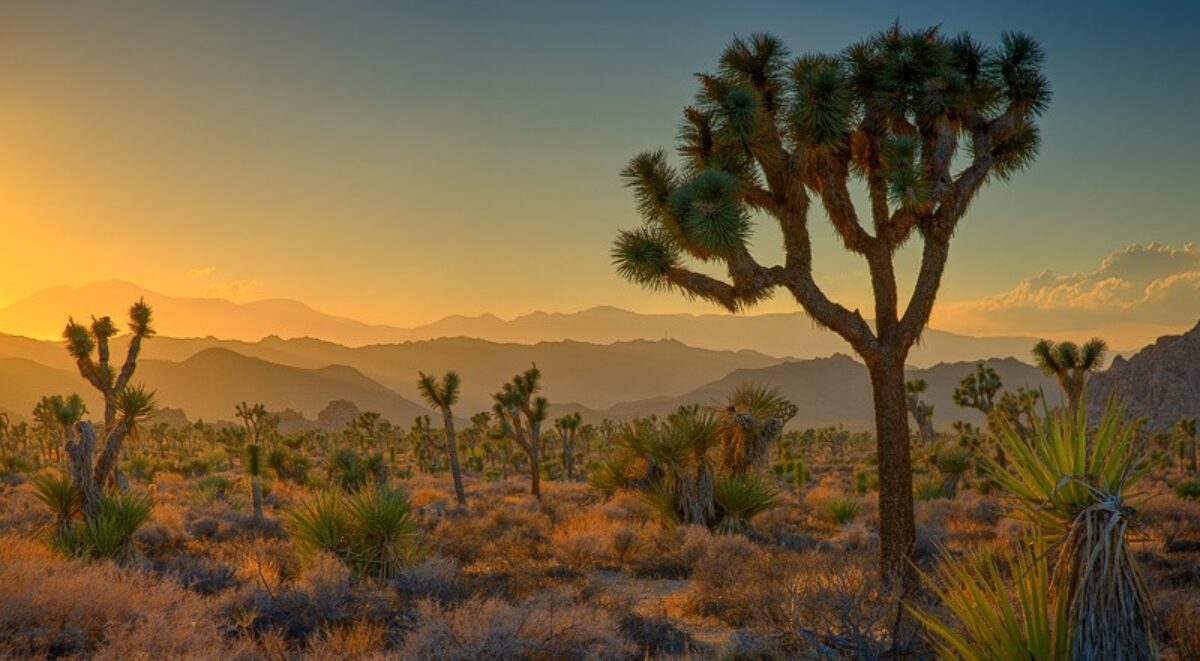
death_valley_sunrise_2012

We do photography workshops.  Come on out and join us.  Click here to check us out.

You can also check out our photography.  Click here.

Technorati Tags: ,,,,,,,
WordPress Tags: technical,aesthetic,Photograph,Vision,impact,photographer,skills,artist

(3290)
The Same Ol’ Question

Even Ansel Adams was critisized for ‘manipulating’ his photographs.

Every time I do a show I get asked multiple times if my photographs are manipulated.  My answer is always, ‘Yes, of course.’  The hidden expectation is that photographs are supposed to be accurate depictions of the scene that is photographed.  This expectation is not new.  And any photographer that seeks to make art rather than documentation must face this question.

Take Ansel Adams for instance….

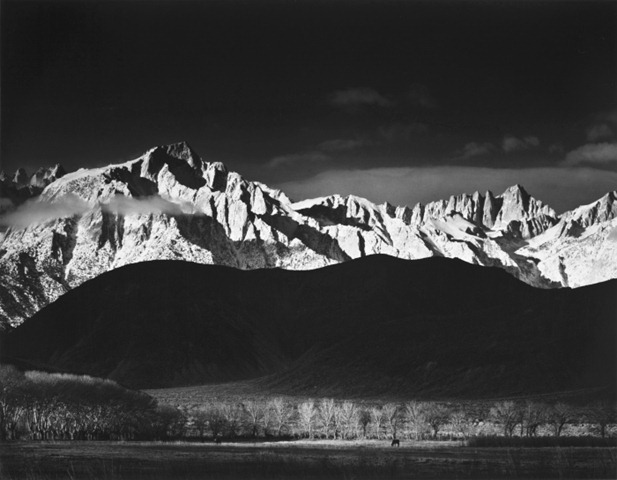
ansel_adams_winter_sunrise

The above iconic Ansel Adams photograph is titled Winter Sunrise.  It is of Mt Whitney and Lone Pine Peak above the Alabama Hills with Adams’ characteristic dramatic lighting.

There’s an interesting excerpt regarding this photograph from his book, “Examples, The Making of 40 Photographs.”

“The enterprising youth of the Lone Pine High School had climbed the rocky slopes of the Alabama Hills and whitewashed a huge white L P for the world to see.  It is a hideous and insulting scar on one of the great vista of our land, and shows in every photograph made of the area.  I ruthlessly removed what I could of the L P from the negative (in the left-hand hill), and have always spotted out any remaining trace in the print.  I have been criticized by some for doing this, but I am not enough of a purist to perpetuate the scar and thereby destroy – for me, at least – the extraordinary beauty and perfection of this scene.”

It seems the debate raged in Adams’ day and continues today.  I guess you know where I stand.  Oh, and for those ‘purists’ that revere Adams, if they only knew.

Winking smile

Go ahead.  Express yourself in your photographs.

Join me on an upcoming workshop.  Click here for more details.

To see more of my photographs click here.

(1565)

Exciting Nighttime Photography – Exposure

Nighttime photography – photographing the moon

There are many techniques involved in nighttime photography.  Star trail photographs are a traditional approach dating back to the film days.  If you think about it, that makes sense.  With the ISOs commercially available to most of us photographers, shooting the nighttime sky was not an option.  We simply didn’t have fast enough film.

With the advent of digital photography we can now push ISOs into the thousands and the noise levels are constantly improving.  And we can modify our cameras’ sensors to sensitize them to infrared light, something that the serious and most accomplished nighttime photographers do.  This provides us the opportunity to photograph both star trails and the night sky.

In previous articles I’ve discussed techniques for both types of nighttime photography.  In the most recent one I describe a technique that can provide both star trails and night sky photographs from a single session.  Here’s the link.

Exciting Nighttime Photography in 10 Easy Steps

One aspect I haven’t covered in detail yet is exposure.

Earlier this week there was a beautiful conjunction of the crescent moon and Venus in the early evening sky.  So I grabbed my camera, got permission from my neighbor and used their front yard to photograph the moon and Venus over the Los Angeles basin here in Southern California.

Continue reading “Exciting Nighttime Photography – Exposure”

(3152)

Did You Manipulate That Photograph?

Did you manipulate that photograph?

When I do art festivals and shows I’m often asked, “Did you manipulate that photograph?”  I have several answers.  The most direct is, “Yes, of course.” 

Other times I’ll reply, “My photographs are what I saw, not what the camera saw.”  Or if I’m feeling really wordy I’ll answer, “Let me explain it this way.  I approach photography from the mindset of a painter. I want to give myself the same creative freedom of a painter.”  To which the inquirer will often respond, “Oh, I get it; you’re an artist.”

To manipulate or not to manipulate.  That’s not even the question.  Why?  Because you have to go to extremes to have a photograph that is NOT manipulated.  OK, that’s a pretty bold statement.  So let’s take a deeper look.

Continue reading “Did You Manipulate That Photograph?”

(802)

Inspiring Quotes – Georgia O’Keeffe

An inspiring quotation from Georgia O’Keeffe

I found I could say things with color and shapes that I couldn’t say any other way – things I had no words for.

(616)

Be Prepared

Don’t be caught without that one piece of camera gear you need to get the shot.

Often times when out shooting with other photographers I hear them say, “I wish I had brought my grad ND filter.”  Or maybe they didn’t have the lens they needed.  “Where is it?” I ask.  “It’s back in my hotel room,” is their response.  “Why didn’t you bring it with you?”  “I didn’t think I would need it,” or “It’s too heavy.”

Truth to tell, I don’t understand the rationale of selecting the gear you think you might need when going out on a shoot.  Why not take it all?  I suppose if you have 20 lenses (I exaggerate) you can’t take them all with you.  But a normal complement of gear that gives you the flexibility you need isn’t that hard to pack and carry.

Continue reading “Be Prepared”

(1080)

Journey – First Steps

Introducing “Journey – First Steps,” a showcase of 24 photographs from Ralph Nordstrom and a chronicling of his discoveries in photography over the past five years.

I’m very excited to announce that I just published my first book.  It’s something I’ve been thinking about for along time.  The title is “Journey – First Steps” and it showcases 24 of my favorite photographs from 2005 up into 2010.  It’s also a chronicle of my development as a photographer from those early uncertain days to today.  Not only does the book contain these photographs but I share with you where I was at the time they were taken and the discoveries I made along the way.

Your are invited to check out the preview.  It contains a sampling of the 54 pages and is available in eBook format (viewable on iPad and iPhone), soft cover and hard cover on Blurb.  It would make a beautiful gift for someone dear.

Oh, and let me know what you think.  Thanks.

We do photography workshops.  Come on out and join us.  Click here to check us out.

You can also check out our photography.  Click here.

(711)

What Else Things Are

What do your photographs say – about the things you photograph and about you? What do your photographs trigger in your viewers’ minds and imaginations?

Brooks Jensen published a very provocative article in the current issue of Lenswork.  He delves into a topic that I’ve thought about ever since I first picked up a digital camera.  It relates to the question of whether or not it is OK to manipulate photographs.  I’ve always contended that it is not only OK but, at least for the kind of photography I do, it is required.  The photographs I create reflect my interpretation of the natural world around us.  Therefore, their subjects and contents are going to reflect something of me.

Jensen goes several steps farther by identifying three major types of photography – Documentary, Personal Narrative and Imaginative.  Jensen describes Documentary photography as telling “someone else’s story.”  What a great way of describing it.  Clearly, then, in documentary photography, the photographer strives to be as true to the subject as possible and minimize or eliminate his or her own coloration or bias.  The goal is total objectivity.

Continue reading “What Else Things Are”

(977)

New Eastern Sierra Photographs

I posted a few new Eastern Sierra photograpns on my website. Here’s an introduction. Check them out. There are more.

I just published a slew of new Eastern Sierra photographs on the website.  Here’s a sampling of some of my favorites.

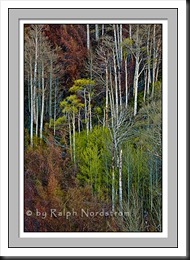
aspen_spring_2011

Let’s start with this one.  In June the South Fork of Bishop Creek, somewhere between Bishop and South Lake, spring is just getting started.  And you can find a stand of aspen and willow that are just starting to dress themselves in their summer garb.  I really like this scene.  It feels balanced and uplifting.

Continue reading “New Eastern Sierra Photographs”

(835)

Central Coast and Napa Journal

Come along as I share some of the beautiful scenes found along California’s Central Coast and in Napa Valley.

California is a great place.  Here are just a few names will help to demonstrate that point – Pacific Ocean, Mojave Desert, Death Valley, Sierra Nevada Mountains, Mt Whitney, Yosemite and Sequoia, redwoods (two different kinds), Big Sur, Mt Shasta; shall I go on?

Recently my wife and I spent a few days in two of these places that makes California so special – the Central Coast and Napa Valley.  I’d like to share a little of what we saw there.  Where to start?

When you think of light houses you don’t necessarily think of California.  But we have some great ones.  Here are a few examples.

point_reyes_110916__A1P6693_4_5_6_7-Edit

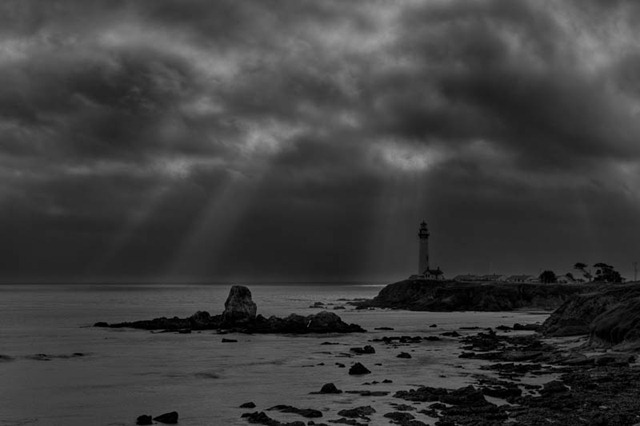
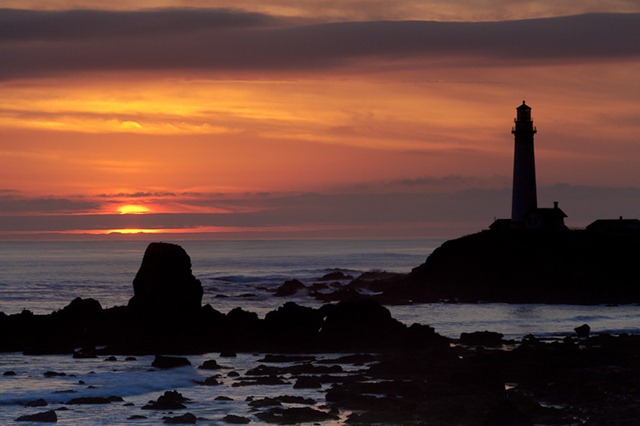
Pigeon Point Lighthouse is really cool, especially on a day like this one.  It has the slender beauty typically associated with New England lighthouses.  And it has the benefit of being on the West Coast where we have some pretty nice sunsets.

Pigeon Point Lighthouse

Continue reading “Central Coast and Napa Journal”

(1249)