What Else Things Are

What do your photographs say – about the things you photograph and about you? What do your photographs trigger in your viewers’ minds and imaginations?

Brooks Jensen published a very provocative article in the current issue of Lenswork.  He delves into a topic that I’ve thought about ever since I first picked up a digital camera.  It relates to the question of whether or not it is OK to manipulate photographs.  I’ve always contended that it is not only OK but, at least for the kind of photography I do, it is required.  The photographs I create reflect my interpretation of the natural world around us.  Therefore, their subjects and contents are going to reflect something of me.

Jensen goes several steps farther by identifying three major types of photography – Documentary, Personal Narrative and Imaginative.  Jensen describes Documentary photography as telling “someone else’s story.”  What a great way of describing it.  Clearly, then, in documentary photography, the photographer strives to be as true to the subject as possible and minimize or eliminate his or her own coloration or bias.  The goal is total objectivity.

Continue reading “What Else Things Are”

(977)

Exciting Nighttime Photography in 10 Easy Steps

Here is a simple 10 step process to capture both star trails and nighttime sky photographs at the same time.

Nighttime photography is a lot of fun, gaining greater popularity and attracting more and more photographers.  I’ve been exploring the various techniques and want to share with you the one I like the most.  Now, I don’t pretend to be a master at nighttime photography.  I’ll leave that up to the legends like Wally Pacholka.  But we can still have a lot of fun and come away with some very nice images.

Continue reading “Exciting Nighttime Photography in 10 Easy Steps”

(23196)

Nighttime Photography

Here’s a technique for combining night sky and star trails photography that really works.

Back in January of 2010 I published a blog post titled.

Ten Tips for Exciting Nighttime Photography

Now, I don’t profess to be an expert on nighttime photography.  But the month of October provided a number of great opportunities to do some night shooting with some people who know what they are doing.  October started off with a trip to Grand Portage in Northern Minnesota near the Canadian border.  There I shot with Travis Novitsky and my brother Roger Nordstrom.  Both are experienced at shooting star trails.  And my friend Wally Pacholka is world renown for his astrophotography.  And while I haven’t had the pleasure of photographing with Wally I figure during the associations I’ve had with him something must have rubbed off.

I’ve put together some thoughts on nighttime photography that I’d like to share with you.

Continue reading “Nighttime Photography”

(806)

New Eastern Sierra Photographs

I posted a few new Eastern Sierra photograpns on my website. Here’s an introduction. Check them out. There are more.

I just published a slew of new Eastern Sierra photographs on the website.  Here’s a sampling of some of my favorites.

aspen_spring_2011

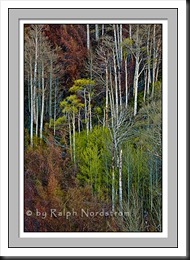
Let’s start with this one.  In June the South Fork of Bishop Creek, somewhere between Bishop and South Lake, spring is just getting started.  And you can find a stand of aspen and willow that are just starting to dress themselves in their summer garb.  I really like this scene.  It feels balanced and uplifting.

Continue reading “New Eastern Sierra Photographs”

(835)

Central Coast and Napa Journal

Come along as I share some of the beautiful scenes found along California’s Central Coast and in Napa Valley.

California is a great place.  Here are just a few names will help to demonstrate that point – Pacific Ocean, Mojave Desert, Death Valley, Sierra Nevada Mountains, Mt Whitney, Yosemite and Sequoia, redwoods (two different kinds), Big Sur, Mt Shasta; shall I go on?

Recently my wife and I spent a few days in two of these places that makes California so special – the Central Coast and Napa Valley.  I’d like to share a little of what we saw there.  Where to start?

When you think of light houses you don’t necessarily think of California.  But we have some great ones.  Here are a few examples.

point_reyes_110916__A1P6693_4_5_6_7-Edit

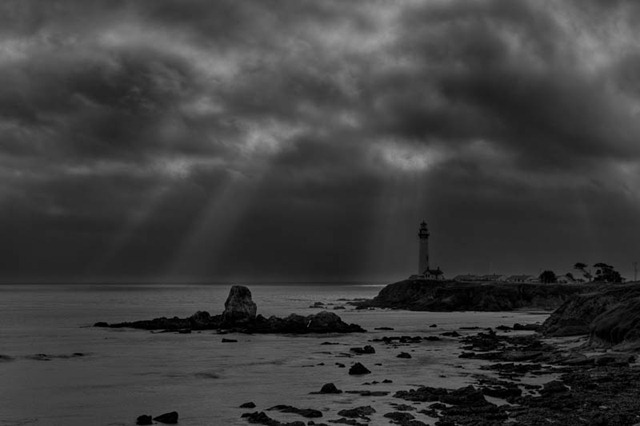
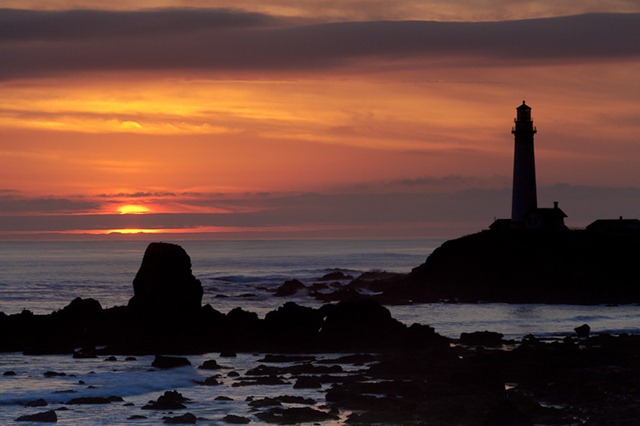
Pigeon Point Lighthouse is really cool, especially on a day like this one.  It has the slender beauty typically associated with New England lighthouses.  And it has the benefit of being on the West Coast where we have some pretty nice sunsets.

Pigeon Point Lighthouse

Continue reading “Central Coast and Napa Journal”

(1249)

The Surprises in the Camera

Do we always know what we’re going to get when we press the shutter or are we sometimes in for a pleasant surprise?

“No tears in the writer, no tears in the reader.  No surprise in the writer, no surprise in the reader.”  Robert Frost

In my workshops I talk about feeling a place before you photograph it.  In fact we do an exercise.  When we arrive at the location I ask the participants to leave their cameras in the car for at least fifteen minutes and just quietly wander around the area until it speaks to them.  Only then can they get their cameras and try to capture what they are feeling.

This is a wonderful way of slowing down and getting in touch with the essence of a place.

But I must confess it doesn’t always work that way for me.

Continue reading “The Surprises in the Camera”

(693)

Mastering Light – Color

Explore a key property of light – color – and how to use it in landscape photography.

One of the things that we landscape photographers pay a lot of attention to is light.  In fact, it is my belief that the study of landscape photography is a never ending study of light.  And that’s a good thing because there’s so much to learn.

Now, I must confess – my analytical mind needs to break things down to help my creative mind better recognize and capitalize on great light.  So get ready ‘cause here come a series of blog posts on light.

What Color Is a Cloud?

The first thing I want to look at is Color.  Now, we’re all pretty familiar with red, green and blue, even cyan, magenta and yellow.  I don’t want to talk about color in that way.  We could discuss the color wheel and that would be informative but, well, not all that exciting.  I’d like to kick this off by asking a simple question…

Continue reading “Mastering Light – Color”

(1571)

Expose to the Right – Revisited

Expose to the right is a powerful technique for capturing the most information in your raw files. But processing these images can be a bit daunting at first.

The post I wrote on Expose to the Right about a year ago is one of the most popular on this blog.  I wrote it after a workshop when I suggested this technique and one of the participants complained the photographs looked horrible.  I still use this technique but my workflow in Lightroom continues to evolve.
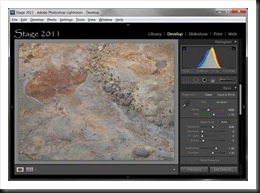
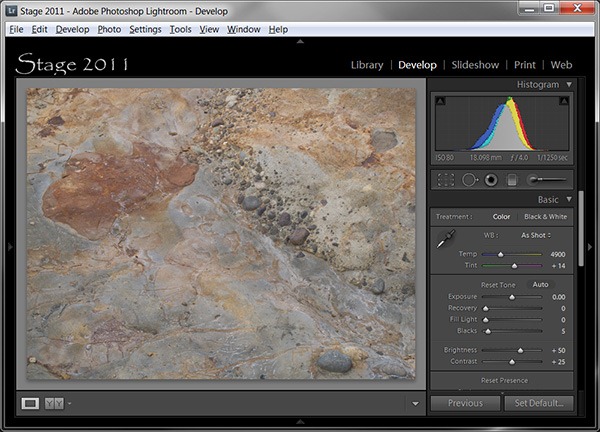
expose to the right 1Recall that Expose to the Right means to overexpose your image so that the histogram shifts toward the right edge.  It is important not to overexpose so much that you introduce highlight clipping.  I like to have a histogram that is positioned a little to the right of center as seen here.  When you expose to the right you can end up with an image that is overexposed by anywhere from 1/3 to a stop or two, depending on the situation.
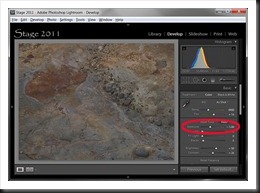
 

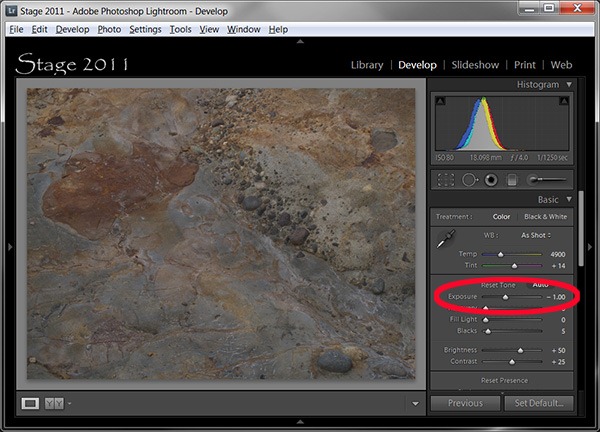
expose to the right 2In the first post I suggested that you can ‘normalize’ the exposure in Lightroom with the Exposure adjustment.  If you overexposed by a stop you can start by decreasing Exposure adjustment in Lightroom by one stop.  This will have the effect of moving the histogram back toward the center or even to the left of center.  This gives you an exposure closer to what the camera’s light meter selected.
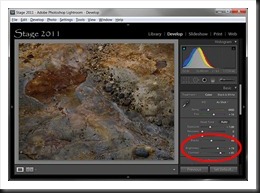


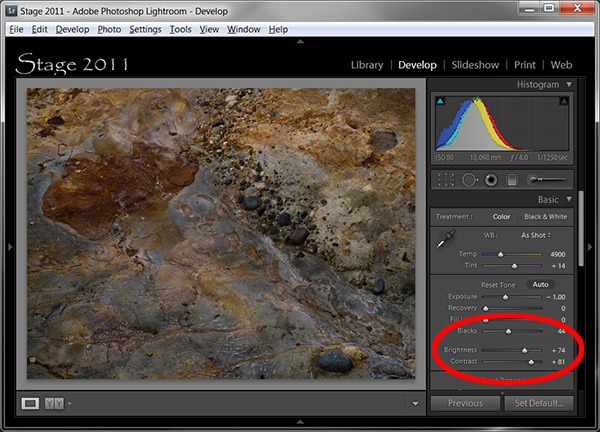
expose to the right 3From there you can continue with your regular workflow.  Here’s an example of some additional adjustments: Blacks to set a black point, Contrast to add interest (contrast is always more interesting than flat) and Brightness to liven it up a little.  There are many adjustments you might perform but these few simple ones serve to illustrate the point.
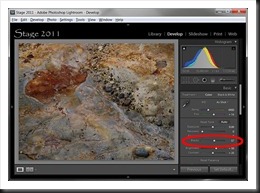


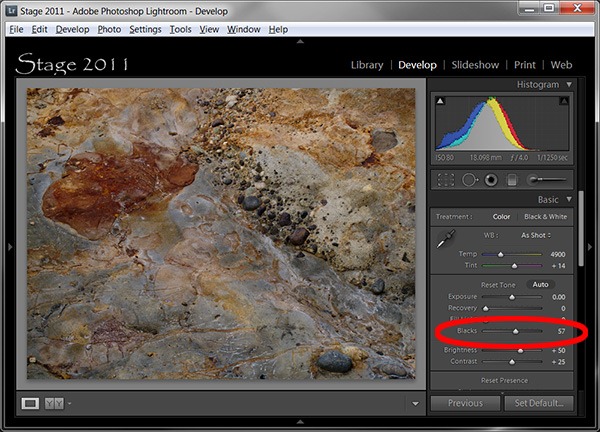
expose to the right 4But another technique would be to take the opposite approach.  Instead of normalizing the exposure, start by setting the black point with the Blacks adjustment.  This has a different effect on the histogram.  Instead of the entire histogram sliding towards the left, the shadow tail is extended without much change in the mid-tones or highlights.  This technique expands the dynamic range of the photograph.
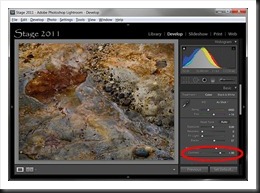


expose to the right 5You can further expand the dynamic range by adding contrast.  With both shadow and highlight areas to work on the Contrast adjustment both brightens and further darkens the image.

In practice you can try both techniques.  Just create two virtual images from the original file and apply one technique to one and the other technique to the other.  Often the first few adjustments you make on an image have an influence on the finished photograph.  So compare the two and decide which one you want to continue with.

This is not about whether one technique is better than the other but rather to give you more options when working with the photographs that you have exposed to the right.

We do photography workshops.  Come on out and join us.  Click here to check us out.

You can also check out our photography.  Click here.

(2312)

A Great Photography Car

The Ford Escape Hybrid gets to stretch its legs in Big Sur.

My 2003 Prius has had it.  At 230,000 miles it was time to trade it in.  It served me well and we went places I had no business taking it (read “some pretty nasty dirt roads”).  But it wasn’t really a good car for landscape photography.  Nevertheless, it never complained.

So around the end of last year I started thinking about a car that would be great for the kind of photography I do.  I had some basic requirements:

  • Cargo space (to carry all my gear including the stuff I need for workshops)
  • High clearance (for those nasty dirt roads)
  • Good gas mileage (I was addicted to 45 mpg from the Prius)
  • 4WD (again, to go those nasty dirt roads)

A survey on the internet turned up several makes and models but the Ford Escape hybrid was at the top of the list.  I visited the dealer and none were to be found in all of Southern California so on January 11th I placed the order.  The decision looked good on paper but would the actual vehicle measure up?

Continue reading “A Great Photography Car”

(554)