Ten Reasons to Take a Photography Workshop

Ten good reasons to take a photogrpahy workshop.

We all love photography.  Perhaps you are a casual photographer, using your smart phone or point-and-shoot camera to capture the precious moments in life you cherish and want to remember.  Perhaps you admire the work of others and would like to be able to capture scenes or moments like they do.  Or maybe you are skilled and have been passionate about your own photography for quite some time now.

For those that seek to develop themselves as photographers there are a couple of approaches you can take.  You can learn on your own by reading and photographing.  And if you are able to devote the time and energy to this process you will surely be successful.  However, it is more of a trial-and-error approach to learning photography and, let’s face it, we don’t all have the time or energy to adequately feed our passion.

Or, you can learn from someone who has already mastered the challenges you encounter along the way.  And one of the most effective and affordable ways of accomplishing this is through a workshop.

So I would like to share with you my top ten reasons for attending a workshop.

1.     Inspiration

Photography workshops give you the opportunity to focus just on photography and capturing the beauty that surrounds you.  The complications of your busy life are left at home or at work and for several stimulating days your existence is focused on one thing – capturing the beauty that surrounds you.

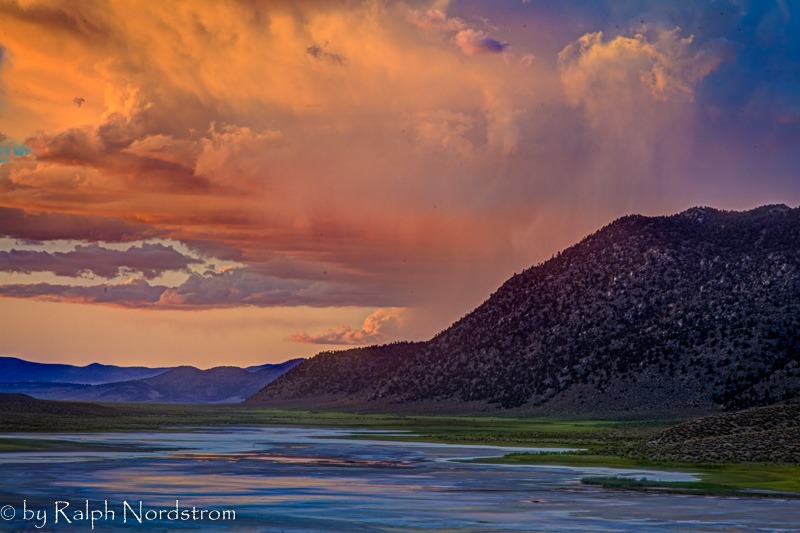
eastern_sierra_130712__SM36935_6_7_8-Edit

Continue reading “Ten Reasons to Take a Photography Workshop”

(985)

12 Tips on Nighttime Photography

Nighttime photography poses its own challenges. Here are some helpful tips on preparing for and getting the most out of your hours spent in the dark.

Here are some tips on nighttime photography from an informative article by Dan Richards in a recent issue Popular Photography.  Credit for these tips goes to three great photographers – Matt Walker, Darren White and Mashahiro Miyasaka.  Here is the heart of what they shared…

  • Use a fast, wide lens.  Wide lenses slow the apparent motion of the stars.  Fast lenses gather more of the faint light.
  • Use a tripod.  The shortest practical exposure is 30 seconds.  Star trails require anything from tens of minutes to an hour or more.
  • Use an intervalometer.  This is essential for exposures greater than 30 seconds or if you plan to take a sequence of 30 second exposures.
  • Be aware of the weather.  An overcast sky will foil nighttime photography plans and a wind will wreak havoc with long exposures.
  • Be careful.  Scout the location ahead of time.  Use a headlamp, especially  one that has a red light so as not to destroy your night vision.
  • Include interesting foregrounds.  They can be silhouettes or you can light paint them.  You also have the option of creating a composite image by capturing a well exposed image of the foreground at low ISO and a high ISO image of the sky and then blending the two.
  • Focusing is really difficult.  Autofocus doesn’t work so you must use manual focus.  Pick the brightest star in the sky and use live view to focus on it (don’t change your focal length to focus; use the focal length you’ll be using for your image).  Another alternative is to focus on an object at infinity during the day and then marking the focus point with fluorescent tape so you can reset the same focus at night.  Again, use the focal length you will be shooting with as the infinity focus point changes as you zoom in and out.
  • Exposure is critical.  If you’re going to shoot starry  night photographs your exposure length will be 30 seconds (with a 24 mm lens or wider).  Shoot wide open and run tests with different ISO settings.  If  you’re going to use a long exposure to get star trails determine the ISO setting your 30 second exposure and then adjust ISO and f/stop to compensate for the length of exposure.  If your ISO is 6400 at f/2.8 and 30 seconds, if you want a 60 second exposure reduce your ISO to 3200.  A two-minute exposure requires an ISO of 1600.
  • Take a workshop.  That’s always good advice, no matter how experienced you are.  There’s always more to learn.
  • Don’t get disheartened.  This is not easy stuff but practice pays off.
  • Get in shape.  Good locations for night photography are going to be where there’s minimal light pollution and that’s a long ways away from city lights.
  • When the temperature is cold wrap a hand warmer around your lens to keep it from fogging over on those long half hour to hour exposures.

Well, that’s it.  Yea, and I confess; I threw in a couple of my tips too.

Hey, here are a couple of blog posts I’ve done on nighttime photography a while back there.

Exciting Nighttime Photography in 10 Easy steps

Nighttime Photography

So, go on out there and give it a try.  Have fun and be careful.


We always enjoy hearing from you so please feel free to leave a comment and share your experiences with us.

Also sharing this post on Google+, Facebook, Twitter and the like is also appreciated.

Join me on an upcoming workshop.  Click here for more details.

To see more of my photographs click here.

(925)

Big Sur Photography Workshop – Highlights

The November Big Sur photography workshop offered some of the best conditions I have ever seen. Read more about it.

We wrapped up the 2014 winter Big Sur workshop last night with a spectacular sunset at Point Lobos in Carmel, California.  But hold on.  Before we get to that I want to share with you some of the highlights from this week.

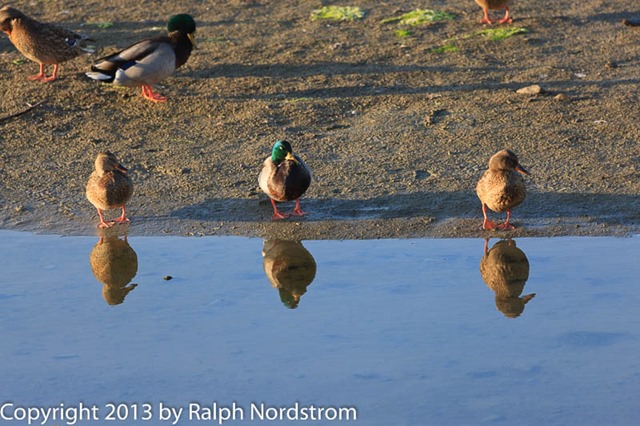
Let’s start with a funky photograph I got at the Santa Rosa Creek estuary way south down in Cambria, California.  I went up to Cambria a couple of days before the workshop started for a little exploring.  It paid off.  I call this one, “Get Your Ducks in a Row.”

big_sur_131103__SM38329

Also that same day I caught a surfer catching a wave.  The surf was definitely up.

big_sur_131103__SM38376

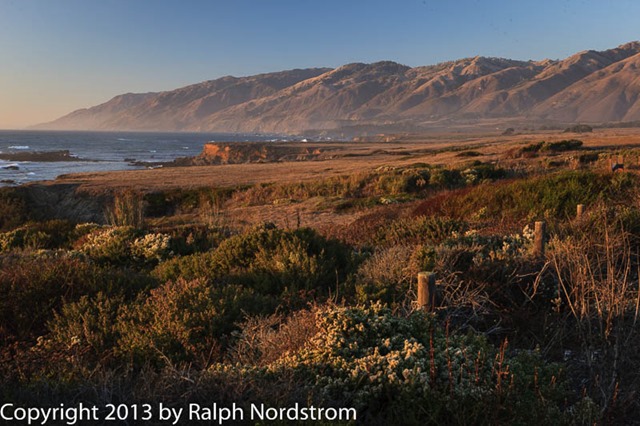
We start the workshop Monday in San Simeon at the southern end of the Big Sur coast.  To get it off to a good start we photographed sunset at the southern end of the impressive Big Sur headlands.  And we were treated to some equally impressive light.

big_sur_131104__SM38454

Continue reading “Big Sur Photography Workshop – Highlights”

(1995)

Getting Great Landscape Photographs – Tripods

How I came to own the tripod I now use.

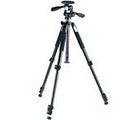
Like many of us I was passionate about photography when I was in college and for a while afterwards.  Then the effort seriously building a career started consuming all my time and photography got pushed aside.  But I bought a new camera when my daughter was born and that kick started my return to photography.  It wasn’t long after that that I started getting back into landscape photography and I went out to purchase a tripod.  I didn’t have a lot to spend so I picked up one in the $125 range and said ‘Ouch’ when I put it on my credit card.  It was something like this one.

tripod-under-200

Every time I wanted to use it I had to screw the camera on to the camera mount.  It wasn’t very tall so I find myself extending the center post all the time and still I had to hunch over to look through the viewfinder.  But it was light weight and I thought all the handles and nobs used to aim and adjust your camera were pretty cool, even if they were a bit awkward.

I got a lot of use out of it – until I set it down at Mt Rushmore, forgot it, and walked off.  When I discovered my mistake we want back to check with the rangers to see if anyone had turned it in.  Of course it was gone.  So we rushed into Rapid City, South Dakota to find a camera store and buy another one for the rest of the trip.  I got the same kind.

It took awhile but it eventually became apparent that a $125 tripod just wasn’t going to do the trick.  It wasn’t very solid and was pretty awkward to use.  So I started reading up on them.  I came across the blog article that explained how you can save $2000 on a tripod by spending $2000 on your first tripod.  That still seemed like a lot of money.  But if that is what it was going to take, ….  So, working from the bottom up I started putting together what I needed.

Continue reading “Getting Great Landscape Photographs – Tripods”

(2050)

Two Minutes of Light

Luck favors those who are parepared – and patient.

You read this story again and again.  The setting may be different but the plot is always the same.

It’s a dreary, overcast day.  You had planned this photo session for months, scouting it on Google Earth for the best location, checked the sun position on TPE (The Photographer’s Ephemeris), and received inspiration from the photographs of other photographers.  You made travel plans and booked lodging.

You arrived early at the iconic location, having traveled across the country and driven many miles in a rental car to get there.  But as you approach the sky turns dark with low hanging, gray clouds.  The light is a disappointment but you walk out to a viewpoint and set up anyway.  You keep telling yourself that good fortune happens to those who are prepared.

The minutes tick by and the sun, unseen behind a thick cloak of clouds, continues its inexorable decent to the horizon.  Other photographers join you and you ask each other, “Will it happen?”  Most shrug their shoulders and reply, “It doesn’t look like it will.”  It turns chilly and a cold breeze starts blowing.  Many photographers mutter, “It’s not going to happen,” pack up their gear and head back to their cars and a warm meal waiting them in the comfort of a nearby restaurant.

Continue reading “Two Minutes of Light”

(1182)

Mastering Strong Photographs – Optimum Exposure

Get optimum exposures in your photographs by mastering these basic techniques.

One of the four qualities of a strong landscape photograph is Optimum Exposure. (The other three are Appropriate Sharpness, Fantastic Light and Strong Composition).  While all four qualities are essential to a strong photograph, the foundation is always and always has been a spot on exposure (did you catch the pun?).  An optimum exposure starts in the field and ends in the darkroom.  Here is an overview, a checklist if you will, of the camera skills you need.

Basic Exposure Controls

One of the greatest advances provided by the digital camera is instant exposure feedback on the photograph you just took.  There are two settings that provide this.  The first and most important is the Histogram.  It can alert you not only to whether your image is over exposed, under exposed or exposed just right but can also alert you to serious exposure problems that require special techniques.  (You can read the series of posts on the histogram here:  Mastering Exposure – Histograms Part 4.)  So configuring your camera to display the histogram (and checking it after every shot) is one essential technique to have.

Related to the histogram is the “blinkies” or Highlight Warning.  This setting causes any areas that have highlight clipping to blink when the image is displayed on the LCD screen immediately after it is captured.  This provides instant warning of the most fateful flaw of all – highlight clipping.

Aperture Priority is the exposure mode I use more than 90% of the time when out shooting.  There are times I use Shutter Priority and Manual but most of the time I turn to Aperture Priority.  This is because depth of field is often the primary consideration (remember the second of the four essential qualities – Appropriate Sharpness?).  And aperture priority is one of the key factors that affects depth of field.

When the histogram tells you that you have over or under exposed your image you need to correct and re-shoot.  And to do that you need to know about Exposure Compensation.  This control overrides your camera by increasing or decreasing the exposure your camera’s light meter calculated.  In this way if your camera has overexposed the image a little, you can apply negative exposure compensation to decrease the exposure.

ISO controls the sensitivity of the cameras sensor.  Lower ISOs decrease sensitivity requiring more light for an optimum exposure.  But the image quality is better.  Higher ISOs increase the sensitivity which is good for low light situations because they require less light.  But the trade-off is poorer image quality.  I normally set ISO to 100 and only change it when I can’t get the exposure I want.

Advanced Exposure Controls

There is one situation in particular that the camera simply can’t handle.  It is referred to as High Dynamic Range.  This occurs when the dynamic range of the scene you are photographing exceeds the dynamic range that your camera’s sensor is capable of capturing.  When this occurs you have four choices.

1. You can choose not to photograph the scene.  This was a fairly commonly chosen option in the film days because there was literally no way of capturing the image without it suffering from highlight clipping.

2. You can underexpose the image so that the highlights are rendered without clipping.  This makes the shadows totally black and you end up with silhouettes, often times a very nice effect.  You can use exposure compensation to accomplish this.

3. You can use a graduated neutral density filter to darken the bright parts of the image without darkening the shadows.  This works well when the sky is bright, the foreground is dark and there’s pretty much of a straight line between the two.

4. You can take multiple bracketed exposures that span the dynamic range of the scene and then blend them together in the darkroom on your computer.  To do this you need to know how to set up Automatic Exposure Bracketing (or AEB) on your camera.

Summary of Camera Techniques

So here is a summary of the camera techniques you need to be able to do in order to achieve Optimum Exposures.

  • Histogram
  • “Blinkies”
  • Aperture Priority (and other exposure modes)
  • Exposure Compensation
  • ISO
  • Automatic Exposure Bracketing (AEB)

If you’re not familiar with any of these I suggest you pull out your camera’s manual and look them up.  Then go out and practice them until they become second nature to you.  This way you can focus on the creative rather than the technical when out in the field.

There’s more work to be done regarding exposure (and the broader subject of tonality) in the darkroom.  But, particularly in the digital age, capturing a RAW image that provides the optimum information with which to work in the darkroom is the first and absolutely essential step.  And by mastering these techniques you will avoid the disappointment of having to discard what would have been a great photograph because you didn’t nail the exposure.


If you like this post please feel free to share it on Facebook or with your friends.

We always enjoy hearing from you so please leave a comment and share your experiences and insights with the rest of us.

We do photography workshops.  Come on out and join us.  Click here to check us out.

You can also check out our photography.  Click here.

(2016)

Mastering Light – Warm and Cool

In which we explore the color of light coming from different sources.

Light has several properties that are important to landscape photographers including quality, direction and color.

It is important to understand that different times of day and weather conditions will produce light of different colors.  Also, when you add artificial light sources the range of colors expands.

Our brains play tricks on us when it comes to color.  During twilight we don’t see that the light is a soft, delicate blue.  In fact, we don’t perceive any color cast at all.  But the camera is not fooled.  It sees what is actually there.  Take this image that I call ‘Breakfast’ as an example.

light-warm_and_cool

When drastically different light sources are set next to each other than our eyes can clearly see the difference in the colors.  In this photograph the interior of our home is illuminated by tungsten lights which give off a very warm color.  That’s why our homes feel so warm and cozy at night – because of the warm light emitted by tungsten lights.  (That will change as we replace the tungsten lights with CFLs or LED lights.)  Outside we have a foggy morning at twilight.  The sun is about 10 minutes away from rising.  And it’s clear the color of the outside light is blue.

If I was standing outside away from the warm tungsten light, my mind would trick me into thinking the light was not blue, just a neutral gray.  But the camera is not fooled.

So then why are we so easily fooled?  Because of perception.  Our brains receive input from all of our senses including our eyes.  And without us even being aware of it, this input is translated into something we are familiar with, concepts and generalizations we have learned from all the accumulated experiences of our lives.  And our brain overrides (manipulates if you will) the actual blue color of the outdoor light and we perceive it as neutral.

Our perceptions help us with everyday living.  They help to bring order to our lives from the endless bombardment of stimuli.  But perception interferes with the photographic process of seeing.  As far as day-to-day life is concerned we don’t need to see that the outdoor light is blue.  But as photographers, cultivating the ability to see beyond our perceptions opens up the world to us in ways we normally can’t even imagine.  And isn’t this what photography is all about?


Join the conversation, share your experiences, leave a comment.  We love to hear from you.  And if you know of someone else who might enjoy this article, please share it.

We do photography workshops.  Come on out and join us.  Click here to check us out.

You can also check out our photography.  Click here.

(1590)

File Naming Strategies

Having an effective file naming convention may not be the most exciting thing but it can sure make your life a lot easier.

OK, so this isn’t a very sexy topic but having a strategy for naming your image files can save you a lot of grief down the road.  Let me run through what I’ve worked out over the years (and believe me, it’s taken several years to perfect this).

So it starts in Lightroom which gives you the option of renaming your files when you import them.  I’m following Scott Kelby’s recommendation here.  Let’s start with a file name as it is created in the camera.  It’s going to look something like this – _SM35116.CR2.  By the way, here’s the photograph that that goes with.

hidden_valley_130119

Hidden Valley (2013)

Continue reading “File Naming Strategies”

(2885)

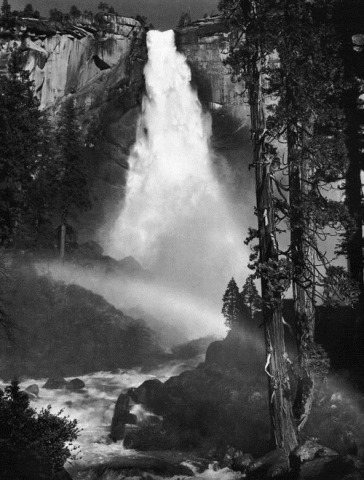
Ansel Adams – The Making of 40 Photographs: Nevada Falls

Get insight into how Ansel Adams worked a scene to come up with his flawless and powerful compositions.

There’s so much to learn from studying Ansel Adams’ photographs, especially when you read what he has to say about them in “Examples – The Making of 40 Photographs”.  Each narrative seems to have its own distinct lesson.  The narrative associated with Nevada Falls is a study in working a composition.

nevada_falls


Continue reading “Ansel Adams – The Making of 40 Photographs: Nevada Falls”

(2751)

A Conversation about Fine Art

Listen in on a conversation about the nature of fine art photography.

What’s on your mind?

I’ve been thinking about ‘fine art.’

You’ve got to be kidding. I mean there are PhDs that study this sort of thing, masters of the arts that won’t touch the topic. What makes you think you can think about ‘fine art?’

I don’t know. I just wonder about it. I’m trying to be an artist and I wonder what it all means, if I’m truly an artist or if I’m getting any closer.

Ok, you’re a photographer, aren’t you? So you must be thinking about fine art photography. You must be nuts! Nobody agrees on what fine art photography is.

Yea, fine art photography, that’s it. What do you think? Do you have any ideas of what it really is? I mean I’ve heard people say that if you want your photography to be art all you have to do is to call it art and it is so. ‘My photographs are fine art.’ Lord knows you hear that enough. But that seems a bit too simplistic, a bit too easy. It seems like it should be more than that.  I mean, can you snap a picture, run down to Costco to get a large print and call it art?


Continue reading “A Conversation about Fine Art”

(1135)