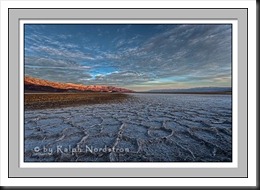
The Making of a Photograph – Clearing Storm, West Temple 2012

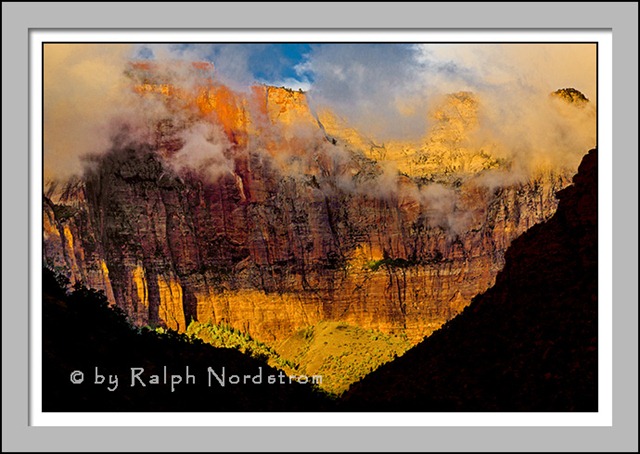
A clearing storm in beautiful Zion Naitonal Park contributes to an exciting photogrpah of the West Temple. Read how this photograph was created.

As I drive across the Mojave Desert late one Thursday night not long ago, heading north on I-15, I have a sense of harmony, of unity with the night, the highway, my car.  The pavement ahead eases into the beam of my headlights, grows brighter as it draws closer and then slips back into darkness as it slides underneath.  Nights like this are a joy.  I’m in a groove, a state of calm serenity and anticipation.  Tomorrow I’ll be returning to Zion National Park, something I always look forward to.  I didn’t notice the faint flashes of light.

Powerful thunderstorms were roiling over eastern California and southern Nevada that night, The dark clouds glowed with flickers of light and precious water dropped on the parched desert.  it was a huge storm and I was chasing it.  Approaching the state line the casino lights of Prim were reflected, bright and shimmering, on what is normally a dry lake bed.  A half hour later as Las Vegas finally came into view, the glitz and glamor of the gaudy hotels was dwarfed by the grandeur of bolts of lightning streaking for miles across the turbulent sky.

The following morning workers were cleaning up after the storm but it hadn’t fully passed.  Storm clouds still blanketed the sky for the remainder of the journey to Zion.  A detour to Kolob Terrace to check the aspens was, I suppose, inevitable.  The falling snow up in the high country was a surprise.  And a delight.  Sunrise the next morning was looking promising.

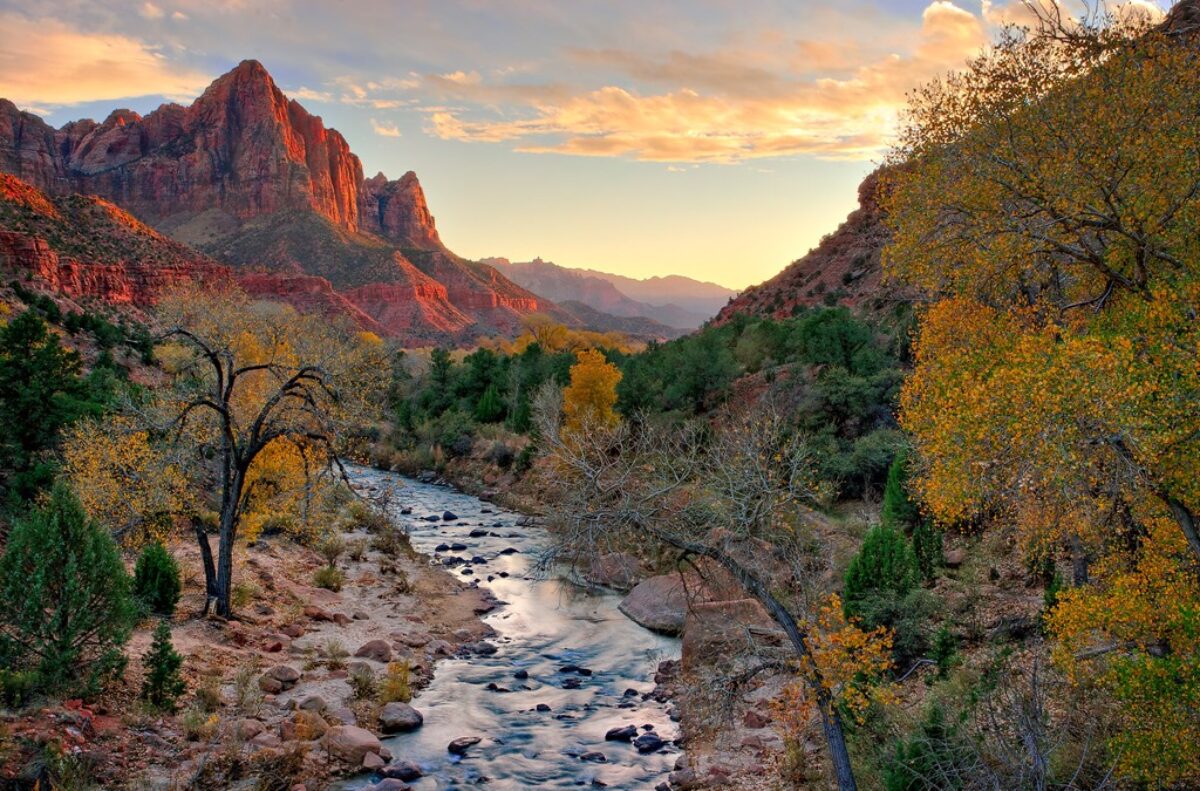
The best location in Zion that gets the full sunrise treatment is West Temple.  I’ve photographed it many times but never got anything that I was excited about.  The most popular location to shoot from is the ‘patio’ behind the museum but on this morning I chose a less visited one – the 2nd switchback on Tunnel Road.  The expectation of clearing storm clouds, the choice of shooting locations – everything worked out just right.

west_temple_clearing_storm_121013

Continue reading “The Making of a Photograph – Clearing Storm, West Temple 2012”

(1888)

Mastering Composition – Working the Shot

How can you create a strong composition? Here’s one method that really works.

There’s no doubt that composition is one of the key elements of a successful image.  You can have all the other factors of a great shot – fantastic light, optimum exposure and appropriate sharpness – but with a weak composition you have a weak photograph. 

I know photographers that work slowly enough to work out the strongest composition before they press the shutter.  I admire these people immensely.  But I don’t work that way, especially in an area I’m unfamiliar with.

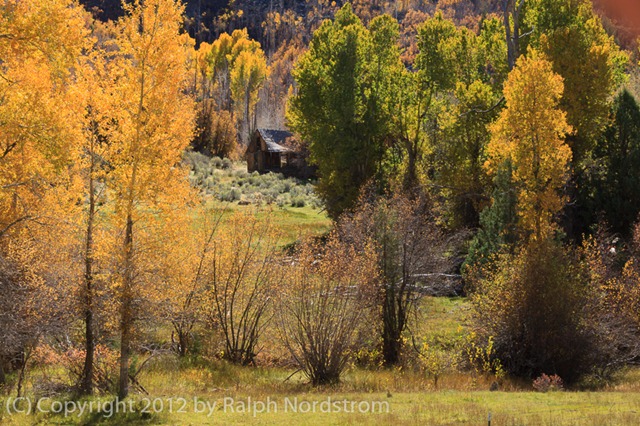
A short while ago I was driving south through Utah on beautiful highway 89 traveling between Bryce Canyon and Zion National Parks after wrapping up a successful photography workshop.  I came upon a stand of cottonwood trees that were in full autumn splendor.  I had to pull over.

I grabbed my point and shoot (Canon G11) and started scouting for photographs.  I like to use the G11 for that, scouting for compositions that are worth the effort of setting up my big Canon.  I found two compositions that were promising.

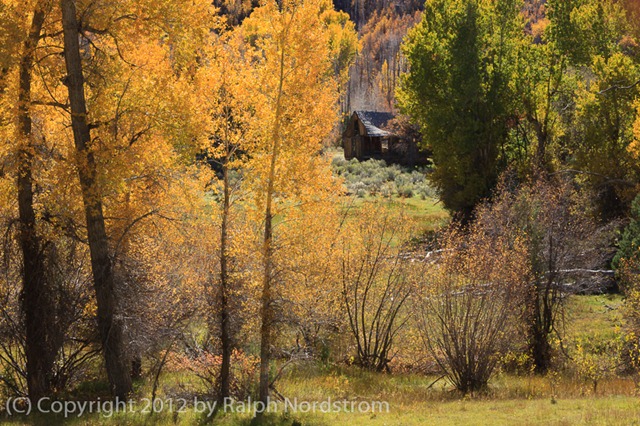
The second proved to be the most interesting, at least in terms of how the final composition evolved.  Behind the cottonwoods was a meadow with a dilapidated shack.  It was so Utah!  I set up what I thought would be an interesting composition.

bryce_121019__SM33931

(Click on the images to enlarge them.)

I positioned my camera so that there would be a narrow opening to the meadow and the shack.  It is a tight composition that draws the viewers eye to the shack which is placed in a very strong position within the frame.  It has a feeling of depth with a strong foreground opening up to the shack in the background.

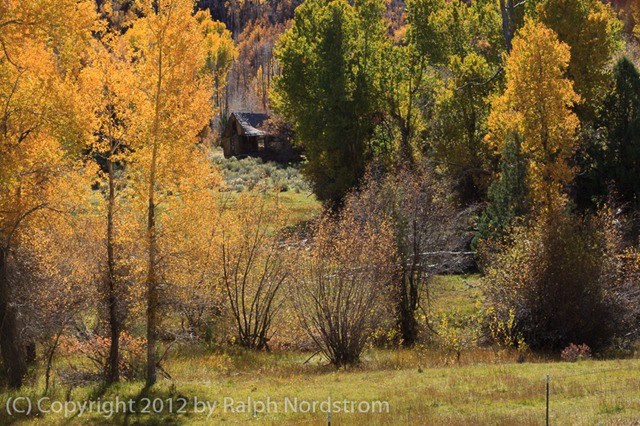
I was feeling good about this composition and then I noticed a glowing cottonwood just outside the frame to the right so I moved the camera a couple of feet to the right and created this image.

bryce_121019__SM33935

The golden cottonwoods on the left are balanced by the single, smaller cottonwood to the right.  This arrangement has the effect of placing more emphasis on the autumnal trees.  The eye makes three stops, first at the cottonwoods on the left, then to the right and finally works its way back to the shack in the back.

I was pretty  pleased with these two compositions and thought I had something to work with when I got home.  So I disassembled everything and put  it back in my camera bag, collapsed the tripod and started back toward the car.  I hadn’t gone 5 steps when I looked back up toward the shack and saw there was another blaze of cottonwoods right next to it.  So I swung my backpack back down to the ground and set up again for this shot.

bryce_121019__SM33939

Now there are three sources of golden light for the eye to explore – the cottonwoods to the left, the one a little further back on the right and the ones way in the back by the shack.  (Odd numbers of things are always good.)  The image is well balanced and every element in it contributes to the entire impression.

There’s a story here, a story of living in this beautiful valley during a time that is gone and will probably never return.  It must not have been an easy life but one of honest, hard work and the satisfaction of living in a place of such splendid beauty.  We would do it differently today with more conveniences and comforts.  And maybe, just maybe, miss out on the more intimate connection with Mother Earth that living in such a simple shack must have provided.


I’d be interested to hear which of the three compositions you like the most.  Please leave a comment saying which one you like and why.  It will make for a very interesting dialog.

If you enjoyed this post please feel free to Like it and share it with your friends.  You can use the links at the top.

Join me on an upcoming workshop.  Click here for more details.

To see more of my photographs click here.

WordPress Tags: Composition,Shot,image,exposure,area,Utah,highway,Bryce,Canyon,Zion,National,Parks,photography,workshop,trees,splendor,Canon,worth,effort,Behind,shack,Click,images,viewers,depth,foreground,background,arrangement,emphasis,tripod,steps,backpack,numbers,element,valley,life,satisfaction,conveniences,connection,Mother,Earth,factors,compositions,feet,cottonwood,cottonwoods,camera,three

(1305)

HDR for Every Day

How can you get great color photographs in the middle of the day? Read this post to find out.

We landscape photographers tend to avoid photographing during the middle of a sunny day.  The light is harsh with no color.  We prefer golden hour or twilight.

But there are times when we have no choice as to when we can shoot.  When we’re on vacation with family we can’t wait until sunset at every location that sparks our interest.  So we get the shot and hope for the best.  But there’s a technique we can use that will greatly enhance our chances of capturing a more compelling photograph.

Continue reading “HDR for Every Day”

(1855)

Ansel Adams – The Making of 40 Photographs: Rock and Surf

Insight into the way Ansel Adams made the photograph “Rock and Surf” and some thoughts on photographing the surf.

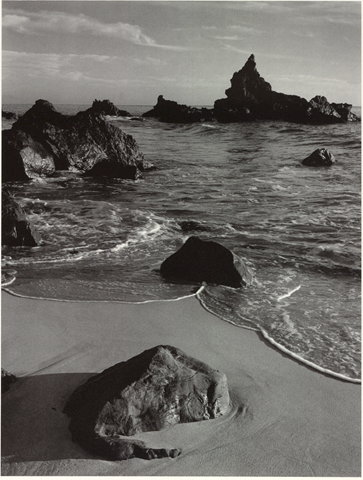
I was fortunate to be in Big Sur last week photographing that magnificent coast with the members of our workshop.  Ansel Adams made some beautiful photographs here as did, of course, Edward Weston.  An increasingly common technique used by photographers is to employ a neutral density filter to get very long exposures that turn the ocean into a sea of ethereal mist.  Many of these photographs are incredibly beautiful.  Personally, I connect with the power and energy of the ocean, something these beautiful photographs do not capture.

Adams’ technique was to stop the motion in of the surf as in this photograph titled “Rock and Surf.”  Freezing the water was essential to the effectiveness of the composition.

rock and surf

Rock and Surf (1951)
Ansel Adams

Continue reading “Ansel Adams – The Making of 40 Photographs: Rock and Surf”

(4045)

How Ansel Adams Did HDR

How did Ansel Adams and other black and white film photographers deal with high dynamic range?

High dynamic range (or HDR) is a condition frequently encountered by landscape photographers where the digital camera’s sensor cannot handle the dynamic range of the scene.  In other words, the scene has very bright highlights with areas of deep shadow.  The resulting image will have clipped highlights (highlights that are pure white with no detail), clipped shadows (shadows that are pure black with no detail or at best, muddy) or both.

In digital photography we have several options including HDR, the techniques whereby we take multiple shots at varying exposures.  The most underexposed image will capture the highlights and the most overexposed image will capture the shadows.  Then we blend them all together with software like PhotoMatix Pro.  The result is an image with bright highlights that still have detail and dark, crisp shadows, also with detail.

But what do film photographers do when they face this same situation?  After all, film may not be able to capture the dynamic range of the scene any better than digital can.  And with film there is not the option of taking multiple shots at different exposures and blending the negatives together.

Continue reading “How Ansel Adams Did HDR”

(8007)

Ansel Adams – The Making of 40 Photographs: Lodgepole Pines

Another post in a continuing series based on Ansel Adams’ wonderful book, “Examples – The Making of 40 Photographs.” This post covers a photograph from his Pictorialist period – Lodgepole Pines.

AA24-Lodgepole_Pines

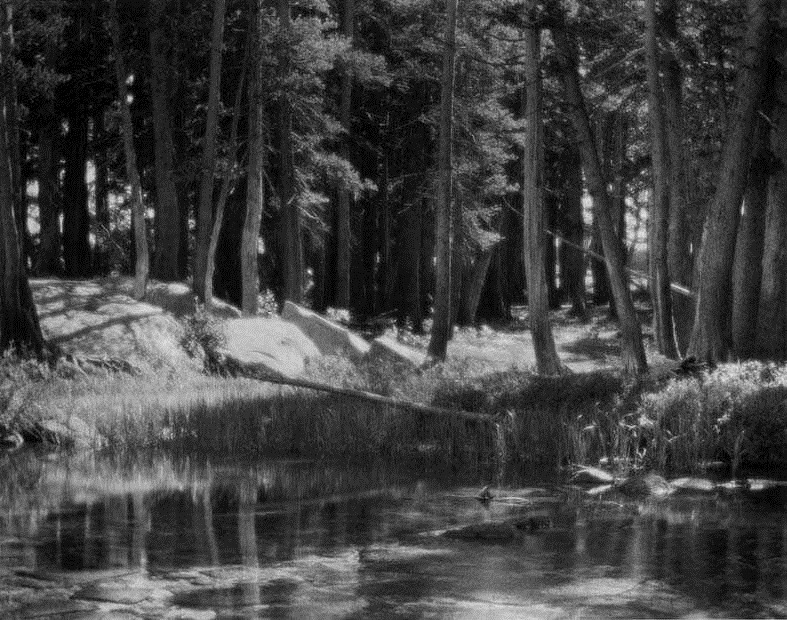
Lodgepole Pines (1921)

This Ansel Adams photograph has always stood out from the rest of his works.  It doesn’t have the usual crispness or drama that one normally expects.  Instead the focus is soft and the shadows are not full and rich.  It almost seems like it might have been created by another person.  And for that reason I find it all the more interesting.

It’s difficult to imagine the great Ansel Adams as an amateur, a novice photographer.  One normally associates him with a supremely confident master of his art, a pioneer of techniques, both technical and aesthetic, that we still use and revere today.  And this is certainly an accurate characterization.  But like all of us, he had to start somewhere.  We all go through a period where our art is in its formative stages, where we are discovering ourselves, our vision and our voice.  And this photograph was part of the process for Adams.

Continue reading “Ansel Adams – The Making of 40 Photographs: Lodgepole Pines”

(3062)

Lightroom Tutorial – Polarizer Filter

How do simulate the effect of a polarizer filter in Lightroom.

A Polarizer filter is generally the first filter a landscape photographer buys.  It is so versatile.  It can darken blue skies, reduce harsh reflections and intensify colors.  Many photographers put polarizers on their lenses and never take them off.

But this is a Lightroom tutorial.  So why in the world am I talking about polarizer filters?  Well, it’s because I have a trick I’d like to share with you, one that I’ve never seen discussed anywhere else.  It’s what you can do in Lightroom to create the polarizer effect without a polarizer.  In fact, it can be better than the real thing, especially if you are shooting with a wide angle lens.  Because, the angle of view can be so great that part of the sky will be affected by the polarizer and the rest will not.  So it looks pretty unnatural when the sky in part of your image is dark and the rest is washed out.

So, what’s the trick?  Well, consider this image taken on a recent trip to Hawaii.  I shot it with my Canon G11 and I don’t even own a polarizer filter for it.  It’s a photograph of the ongoing eruption in a crater in the Kilauea caldera.  In the bottom of the crater is a lake of lava.  The smoke you see is a plume of noxious gas.

polarizer_1

(Click on the image for a larger view)

Continue reading “Lightroom Tutorial – Polarizer Filter”

(20431)

Ansel Adams – The Making of 40 Photographs: Frozen Lake and Cliffs

Explore with me Ansel Adam’s comments on the making of “Frozen Lake and Cliffs.”

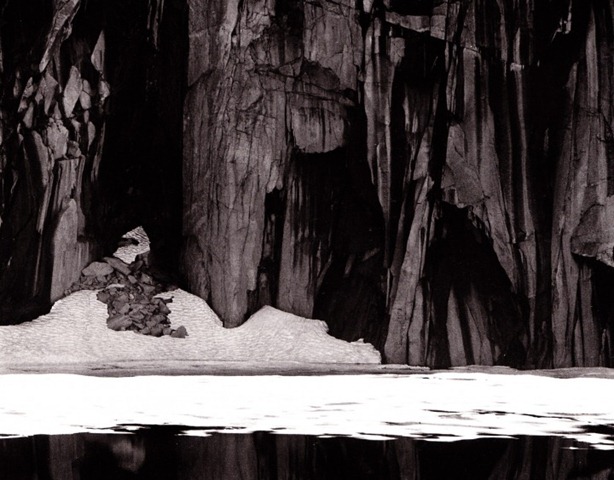
It was in the  ‘70s when I was backpacking through the Kaweah Gap areas of the Sierra Nevada mountains.  We were two days out and came upon this lake.  I instantly recognized it from on of Ansel Adams that I particularly liked – Precipice Lake.  It was exciting and we spent the night there.

Frozen Lake and Cliffs (1932)

I’ve always been a fan of this Ansel Adams classic.   For me it has a feeling of immensity and majesty.  So it  has a special meaning to me reading about it in “Examples.”   A few things caught my attention in Adams’ narrative…

Continue reading “Ansel Adams – The Making of 40 Photographs: Frozen Lake and Cliffs”

(2248)

Twelve Tips for Buying Your Next Lens

Know what to look for when purchasing your next lens and get the one that will serve your well for years to come.

A student of mine asked me for help in selecting a telephoto lens – what to look for and what to avoid.  I put down a few ideas for him and thought that maybe you might also find this topic interesting.

Sooner or later we all buy a lens or two or five or six.  I currently have four lenses in my camera bag – a wide angle zoom (17-40 mm, f/4), a mid range zoom (24-70 f/2.8), my workhorse lens (24-105 mm, f/4) and a telephoto zoom (70-200mm, f 2.8).

I have two ground rules for buying lenses that I have shared with many people.

1.  There must be a demonstrated need.  In other words, if you can’t realize your vision because you’re missing a particular lens then it’s time to consider adding one.  Students, friends and colleagues ask me if I think they should buy a hot new lens.  I always ask them, “What would this lens permit you to do that you can’t do with your current lenses?”  Often, the answer is that it does nothing new for them, they just think it’s a cool lens.

2.  Purchase the best glass you can afford.  You will go through several camera bodies in your career but you’ll never outgrow a high quality lens.

So those are the ground rules but what else is there?

death_valley_sunrise_2012

Continue reading “Twelve Tips for Buying Your Next Lens”

(1348)

Ansel Adams – The Making of 40 Photographs

A continuing series of posts inspired by Ansel Adams’ book “Examples – The Making of 40 Photographs.” In this post, the 1932 photograph “Alfred Stieglitz: An American Place.”

I’m continuing my journey through this marvelous book, “Examples – The Making of 40 Photographs” by Ansel Adams.  It’s a fascinating experience.  Much of the legacy of Ansel Adams is distorted these days because of all the hype about him in the press.  But to read the master’s own words is inspiring and refreshing.

Alfred Stieglitz, An American Place
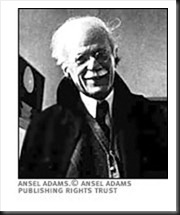
Alfred Stieglitz

I could only find this tiny rendition of the photograph Adams discusses in his book.  So I apologize for the quality.  But the story is the important thing.

Adams’ main cameras were large view cameras.  I have two 8X10 prints of his hanging in our home, contact prints made directly from 8X10 negatives.  In fact, most photographers of the time (1932) photographed with large format cameras and their prints were contact prints.  Photographers that used enlargers were extremely rare.

This photograph of Stieglitz was taken with an amazing new device, a Zeiss Contax 35mm camera.  It was taken when Adams visited Stieglitz’s gallery in New York to show some of his photographs to the one most people considered the finest photographer in the country.  Stieglitz was impressed and arranged for Adams to have a one person show.

Adams commented on his experiences using a small camera which sounds very similar to today’s comments regarding digital SLRs.

“Small cameras make pictures far more immediate; and many negatives could be made in the time required to produce one with a sheet-film camera.  The technique of 35mm photography appears simple, yet it becomes very difficult and exacting at the highest levels.  One is beguiled by the quick finder-viewing and operation, and by the very questionable inclination to make may photographs with the hope that some will be good….  The best 35mm photographers I have known work with great efficiency, making every exposure with perceptive care….”

One can substitute ‘DSLR’ for ‘small camera’ and the statement rings just as true today.

Having photographed in the past with a 4X5 camera I know the slow, exacting deliberation it takes and often think that this is a desirable approach with my Canon 1Ds Mark III and even my Canon G11.  The latter especially is great for spontaneous photography.  Setting up the Mark III is a much more deliberate process but not like setting up a 4X5.  I like to encourage my workshop students to slow down, connect with the land and then try to capture what they are feeling.  You don’t get this from chasing after as many  captures as you can find.

I was standing next to a large format photographer on ‘The Bridge” in Zion National Park at sunset.  He was shooting 8X10 color film.  I asked him how much it cost to press the shutter.  He replied, “$35.”  The light didn’t happen that time and he did not press the shutter.   One of the beauties of digital photography is that it doesn’t cost us anything to press the shutter.  But if it did, we would slow down and our photography would benefit from it.

In researching for this post I came across a letter by Ansel Adams that I must share with you.  The letter was written to his good friend Cedric Wright.  Adams had just come through a period where he was emotionally torn between passion for his beautiful lab assistant and commitment to his wife Virginia and their two children.  He had a clarifying moment in Yosemite when he observed a glorious thundercloud over Half Dome, a moment in which he saw clearly the meaning of love, friendship and art.  Here is what he wrote.

“Dear Cedric,

“A strange thing happened to me today. I saw a big thundercloud move down over Half Dome, and it was so big and clear and brilliant that it made me see many things that were drifting around inside of me; things that relate to those who are loved and those who are real friends.

“For the first time I know what love is; what friends are; and what art should be.

“Love is a seeking for a way of life; the way that cannot be followed alone; the resonance of all spiritual and physical things….

“Friendship is another form of love — more passive perhaps, but full of the transmitting and acceptances of things like thunderclouds and grass and the clean granite of reality.

“Art is both love and friendship and understanding: the desire to give. It is not charity, which is the giving of things. It is more than kindness, which is the giving of self. It is both the taking and giving of beauty, the turning out to the light of the inner folds of the awareness of the spirit. It is a recreation on another plane of the realities of the world; the tragic and wonderful realities of earth and men, and of all the interrelations of these.

“Ansel”

Join me on an upcoming workshop.  Click here for more details.

To see more of my photographs click here.

WordPress Tags: Ansel,Adams,legacy,Stieglitz,American,Place,Photographers,Zeiss,Contax,gallery,SLRs,pictures,sheet film,technique,photography,exposure,DSLR,Canon 1Ds Mark III,photography workshop,Zion,National,Park,sunset,friend,passion,commitment,wife,Virginia,children,moment,Yosemite,Half,Dome,friendship,Here,Dear,friends,Love,life,resonance,grass,granite,self,world,earth,students,cameras,camera,photographer,digital,thundercloud

(2522)