Ansel Adams – The Making of 40 Photographs: Frozen Lake and Cliffs

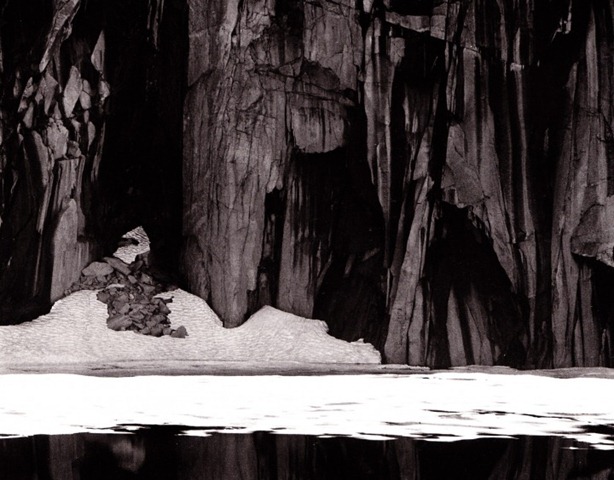
Explore with me Ansel Adam’s comments on the making of “Frozen Lake and Cliffs.”

It was in the  ‘70s when I was backpacking through the Kaweah Gap areas of the Sierra Nevada mountains.  We were two days out and came upon this lake.  I instantly recognized it from on of Ansel Adams that I particularly liked – Precipice Lake.  It was exciting and we spent the night there.

Frozen Lake and Cliffs (1932)

I’ve always been a fan of this Ansel Adams classic.   For me it has a feeling of immensity and majesty.  So it  has a special meaning to me reading about it in “Examples.”   A few things caught my attention in Adams’ narrative…

Continue reading “Ansel Adams – The Making of 40 Photographs: Frozen Lake and Cliffs”

(2248)

Twelve Tips for Buying Your Next Lens

Know what to look for when purchasing your next lens and get the one that will serve your well for years to come.

A student of mine asked me for help in selecting a telephoto lens – what to look for and what to avoid.  I put down a few ideas for him and thought that maybe you might also find this topic interesting.

Sooner or later we all buy a lens or two or five or six.  I currently have four lenses in my camera bag – a wide angle zoom (17-40 mm, f/4), a mid range zoom (24-70 f/2.8), my workhorse lens (24-105 mm, f/4) and a telephoto zoom (70-200mm, f 2.8).

I have two ground rules for buying lenses that I have shared with many people.

1.  There must be a demonstrated need.  In other words, if you can’t realize your vision because you’re missing a particular lens then it’s time to consider adding one.  Students, friends and colleagues ask me if I think they should buy a hot new lens.  I always ask them, “What would this lens permit you to do that you can’t do with your current lenses?”  Often, the answer is that it does nothing new for them, they just think it’s a cool lens.

2.  Purchase the best glass you can afford.  You will go through several camera bodies in your career but you’ll never outgrow a high quality lens.

So those are the ground rules but what else is there?

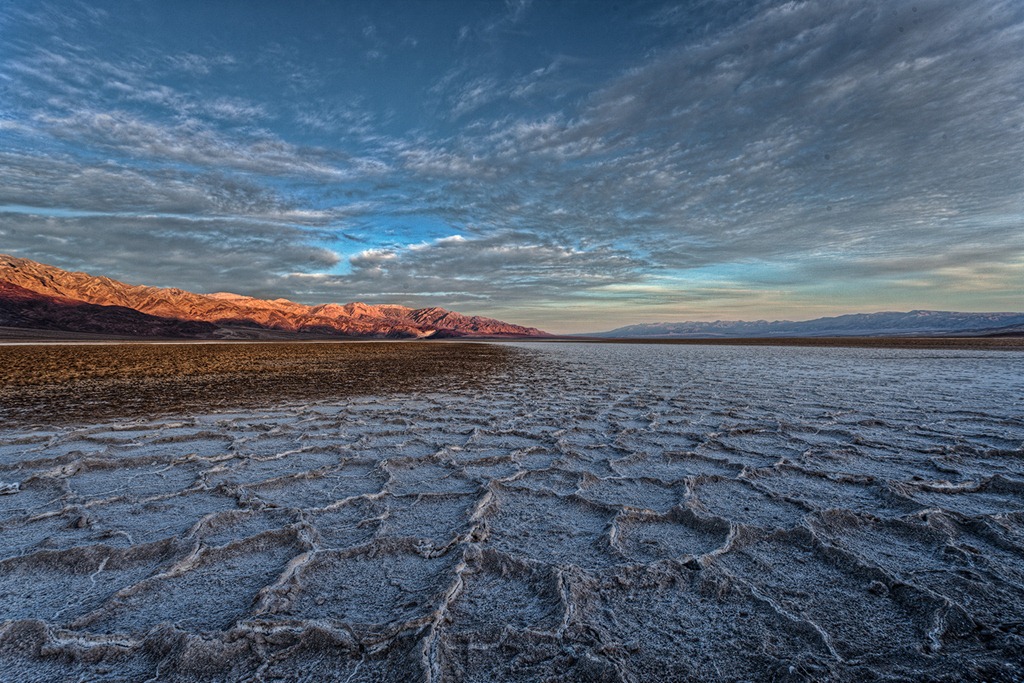
death_valley_sunrise_2012

Continue reading “Twelve Tips for Buying Your Next Lens”

(1348)

Ansel Adams – The Making of 40 Photographs

A continuing series of posts inspired by Ansel Adams’ book “Examples – The Making of 40 Photographs.” In this post, the 1932 photograph “Alfred Stieglitz: An American Place.”

I’m continuing my journey through this marvelous book, “Examples – The Making of 40 Photographs” by Ansel Adams.  It’s a fascinating experience.  Much of the legacy of Ansel Adams is distorted these days because of all the hype about him in the press.  But to read the master’s own words is inspiring and refreshing.

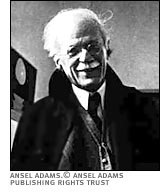
Alfred Stieglitz, An American Place
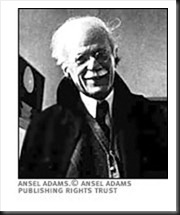
Alfred Stieglitz

I could only find this tiny rendition of the photograph Adams discusses in his book.  So I apologize for the quality.  But the story is the important thing.

Adams’ main cameras were large view cameras.  I have two 8X10 prints of his hanging in our home, contact prints made directly from 8X10 negatives.  In fact, most photographers of the time (1932) photographed with large format cameras and their prints were contact prints.  Photographers that used enlargers were extremely rare.

This photograph of Stieglitz was taken with an amazing new device, a Zeiss Contax 35mm camera.  It was taken when Adams visited Stieglitz’s gallery in New York to show some of his photographs to the one most people considered the finest photographer in the country.  Stieglitz was impressed and arranged for Adams to have a one person show.

Adams commented on his experiences using a small camera which sounds very similar to today’s comments regarding digital SLRs.

“Small cameras make pictures far more immediate; and many negatives could be made in the time required to produce one with a sheet-film camera.  The technique of 35mm photography appears simple, yet it becomes very difficult and exacting at the highest levels.  One is beguiled by the quick finder-viewing and operation, and by the very questionable inclination to make may photographs with the hope that some will be good….  The best 35mm photographers I have known work with great efficiency, making every exposure with perceptive care….”

One can substitute ‘DSLR’ for ‘small camera’ and the statement rings just as true today.

Having photographed in the past with a 4X5 camera I know the slow, exacting deliberation it takes and often think that this is a desirable approach with my Canon 1Ds Mark III and even my Canon G11.  The latter especially is great for spontaneous photography.  Setting up the Mark III is a much more deliberate process but not like setting up a 4X5.  I like to encourage my workshop students to slow down, connect with the land and then try to capture what they are feeling.  You don’t get this from chasing after as many  captures as you can find.

I was standing next to a large format photographer on ‘The Bridge” in Zion National Park at sunset.  He was shooting 8X10 color film.  I asked him how much it cost to press the shutter.  He replied, “$35.”  The light didn’t happen that time and he did not press the shutter.   One of the beauties of digital photography is that it doesn’t cost us anything to press the shutter.  But if it did, we would slow down and our photography would benefit from it.

In researching for this post I came across a letter by Ansel Adams that I must share with you.  The letter was written to his good friend Cedric Wright.  Adams had just come through a period where he was emotionally torn between passion for his beautiful lab assistant and commitment to his wife Virginia and their two children.  He had a clarifying moment in Yosemite when he observed a glorious thundercloud over Half Dome, a moment in which he saw clearly the meaning of love, friendship and art.  Here is what he wrote.

“Dear Cedric,

“A strange thing happened to me today. I saw a big thundercloud move down over Half Dome, and it was so big and clear and brilliant that it made me see many things that were drifting around inside of me; things that relate to those who are loved and those who are real friends.

“For the first time I know what love is; what friends are; and what art should be.

“Love is a seeking for a way of life; the way that cannot be followed alone; the resonance of all spiritual and physical things….

“Friendship is another form of love — more passive perhaps, but full of the transmitting and acceptances of things like thunderclouds and grass and the clean granite of reality.

“Art is both love and friendship and understanding: the desire to give. It is not charity, which is the giving of things. It is more than kindness, which is the giving of self. It is both the taking and giving of beauty, the turning out to the light of the inner folds of the awareness of the spirit. It is a recreation on another plane of the realities of the world; the tragic and wonderful realities of earth and men, and of all the interrelations of these.

“Ansel”

Join me on an upcoming workshop.  Click here for more details.

To see more of my photographs click here.

WordPress Tags: Ansel,Adams,legacy,Stieglitz,American,Place,Photographers,Zeiss,Contax,gallery,SLRs,pictures,sheet film,technique,photography,exposure,DSLR,Canon 1Ds Mark III,photography workshop,Zion,National,Park,sunset,friend,passion,commitment,wife,Virginia,children,moment,Yosemite,Half,Dome,friendship,Here,Dear,friends,Love,life,resonance,grass,granite,self,world,earth,students,cameras,camera,photographer,digital,thundercloud

(2522)

Making a Photograph – Vision

Develop your vision and express yourself through your photographs.

“This photograph speaks to me.”

The photographs that have a strong impact on us speak to us.  The photographer has created an image that moves us.  Did he or she have something in mind when making the photograph?  Probably so.  Strong images just don’t happen by accident.

As one grows as a photographer one’s vision becomes clearer.  One begins to discover who they are and what they have to say.  And as one’s technical and aesthetic skills develop, skills used in both the field and the darkroom, one’s ability to express their vision becomes stronger.

The artist’s vision is an important element of their art.  The clearer an artist is on what his or her vision is the more expressive their art becomes.

If you’re not clear on what your vision is, live with your photographs.  Become aware of what you associate with them, what stories they are telling you, how they make you feel.  And as your vision emerges nurture it, strengthen it, let it speak through you and your art.  And then your photographs will also speak to others.

death_valley_sunrise_2012

We do photography workshops.  Come on out and join us.  Click here to check us out.

You can also check out our photography.  Click here.

Technorati Tags: ,,,,,,,
WordPress Tags: technical,aesthetic,Photograph,Vision,impact,photographer,skills,artist

(3290)

Making a Photograph – The Four Pillars

Explore the four things that make a great landscape photograph – Fantastic Light, Strong Composition, Appropriate Sharpness and Optimum Exposure.

I’ve been giving a lot of thought recently to what goes in to making a great landscape photograph. It turns out there are four things, four pillars if you will.  Four, that’s a good number.  There are the four legs of a table or the four wheels of a car.  And not to forget the four sacred directions of the Native Americans.

In landscape photography the four pillars are evenly divided between the aesthetics and the technical.  So what are they?  The two aesthetic pillars are Fantastic Light and Strong Composition.  No surprise there.  The two technical pillars are Appropriate Sharpness and Optimum Exposure.  No surprise there either.  If just one of those pillars is missing, well, the table collapses, the image suffers.

Let’s look at them one by one….

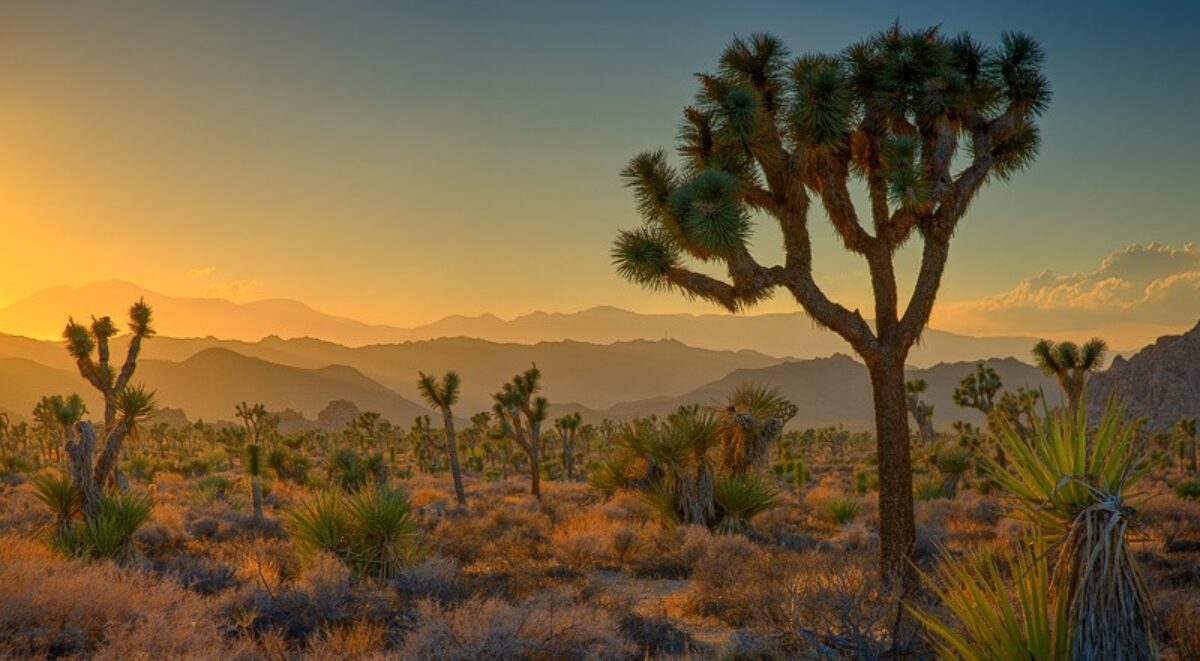
joshua_tree_spring_sunrise_2011
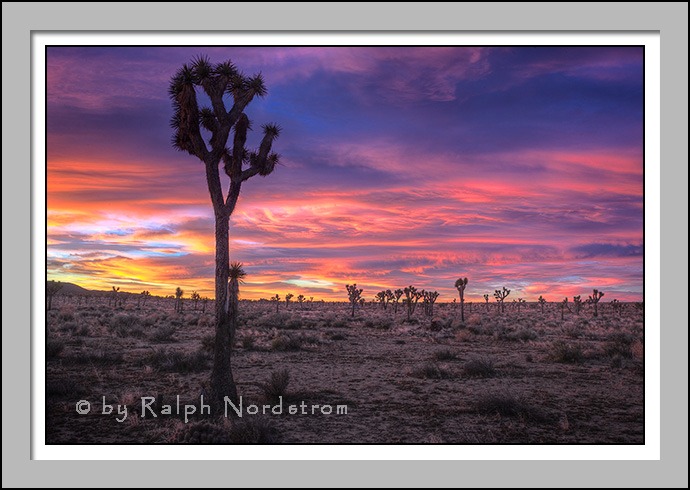
Joshua Tree Spring Sunrise (2011)
(click on the images to enlarge them)

Continue reading “Making a Photograph – The Four Pillars”

(7650)

Lightroom Tutorial – Diamonds in the Haystack

So you’ve come back from a shoot with hundreds of not thousands of files. How do you find the diamonds in such a large haystack?

I got a comment on a recent post on workflow.  (Lightroom Tutorial – Workflow)

The question was if there was a way in Lightroom to sort through a large number of photographs to select the ones you want to work on.

Here’s the situation.  You’ve just returned from a five day workshop.  And you have a thousand or so photographs.  Now we know that not everyone of these images is a keeper.  Personally, I’m delighted if I get four or five keepers from a five day workshop.  Hey, given the vagaries of weather and light, I’m happy if I get one.

But the prospect of sifting through hundreds and even thousands of images can be a bit overwhelming.  So here’s what I do.

Continue reading “Lightroom Tutorial – Diamonds in the Haystack”

(2018)

Lightroom Tutorial – Workflow

An overview of a very effective Lightroom workflow.

There are about as many definitions of “fine art photography” as there are people who call themselves “fine art photographers.”  For many of us, fine art photography is an expression of our view of the world.  Much of what we see in the world is captured in the images we capture in the field.  But that’s not the whole story.  Why?  Because the true expressive quality of our photographs comes to life in the post processing – the digital darkroom if you will.

Continue reading “Lightroom Tutorial – Workflow”

(2837)

Did You Manipulate That Photograph?

Did you manipulate that photograph?

When I do art festivals and shows I’m often asked, “Did you manipulate that photograph?”  I have several answers.  The most direct is, “Yes, of course.” 

Other times I’ll reply, “My photographs are what I saw, not what the camera saw.”  Or if I’m feeling really wordy I’ll answer, “Let me explain it this way.  I approach photography from the mindset of a painter. I want to give myself the same creative freedom of a painter.”  To which the inquirer will often respond, “Oh, I get it; you’re an artist.”

To manipulate or not to manipulate.  That’s not even the question.  Why?  Because you have to go to extremes to have a photograph that is NOT manipulated.  OK, that’s a pretty bold statement.  So let’s take a deeper look.

Continue reading “Did You Manipulate That Photograph?”

(802)

Taking Your Photography to the Next Level – Fine Art

What is involved in becoming a fine art photographer.

In the previous post in this series I presented the idea that calendar art is a worthy first goal for serious photographers.  (Read Taking Your Photography to the Next Level.)  And aside from the fact that the subject matter of calendar art may be fairly run of the mill, the technical and aesthetic qualities are generally excellent.

In that post I ended with this thought:

Calendar art is about the subject of the photograph.  The photographer is transparent.  In fine art photography the influence of the artist becomes more apparent.


Continue reading “Taking Your Photography to the Next Level – Fine Art”

(1744)

Inspiring Quotes – Georgia O’Keeffe

An inspiring quotation from Georgia O’Keeffe

I found I could say things with color and shapes that I couldn’t say any other way – things I had no words for.

(616)